PICK A SPOT ON THE MAP and make a commitment. Indeed, that’s the first step — before you can come up with an excuse not to go. Beat down that procrastination with a plan in place! Your first RV trip of the season is perhaps one of the most important, giving you the chance to complete a full systems check on your RV while simultaneously dodging peak season crowds. Plus—as we’ll argue here—it’s a great excuse to stay local and explore areas closer to home.
Conveniently, the timing of that first trip—we call it a shakedown—often coincides with many families’ spring breaks. A trip like this offers the unique opportunity to enjoy the solitude that becomes increasingly difficult to find the further the camping season progresses, as well as dewinterize, troubleshoot systems, and test new gear in a low-risk setting, often relatively close to home and without the stress of cross-country miles.
We’ve found these types of trips also align with emerging US camping trends, such as growing interest in dispersed camping, the increased use of convenient RV tech, and local, quieter travel. So if you’re weighing that decision of whether or not to go—or where to go—let us make a few suggestions.
Key Takeaways
- A “Shakedown” Trip is Essential: This is a shorter, local trip designed to be a full systems check for your RV after it has been in storage. It’s a low-risk opportunity to test everything on your camper before the longer, more substantial trips of the year.
- Embrace Local and Low-Stress Travel in 2026: Campers are increasingly favoring affordable, local, and less crowded destinations over expensive, distant, “bucket-list” trips. Staying closer to home reduces stress and saves money on fuel, too.
- Technology Enables Hybrid “Off-Grid, but Connected” Experiences: There is a growing trend towards seeking remote, off-grid camping experiences without giving up internet connectivity. Modern RVs are equipped to do just that.
What Campers Want in 2026
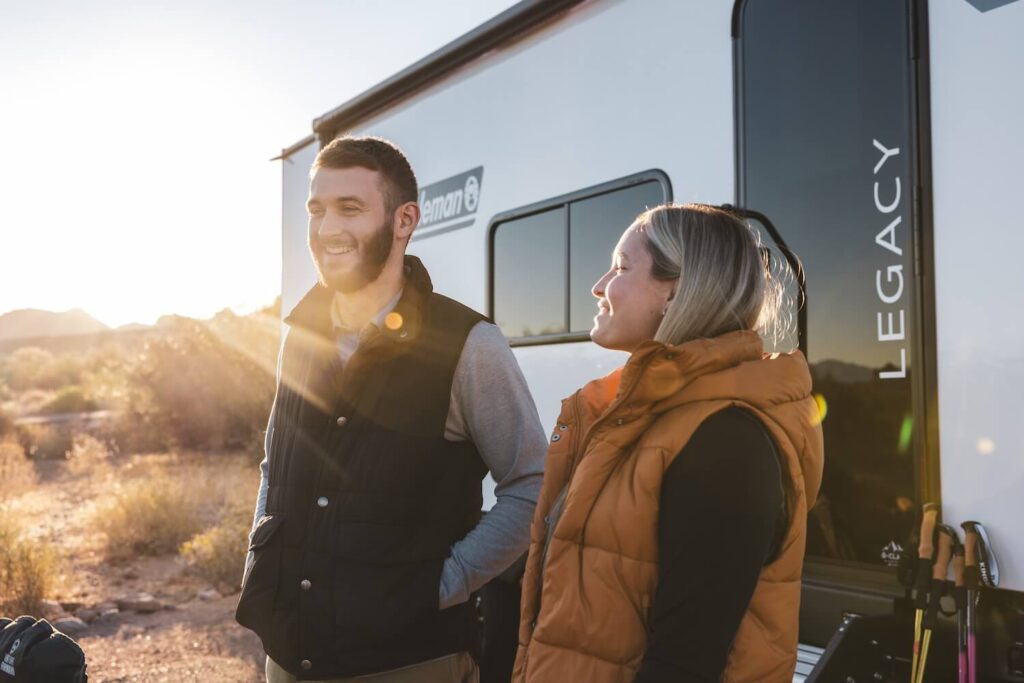
As a new year of camping kicks off, outdoor enthusiasts are taking stock of what they want from their vacations. A popular sentiment: more meaningful stress-free experiences with friends and family rather than expensive, distant, bucket-list-worthy destinations.
RVshare’s 2026 Travel Trends Report shows that campers are looking for more local, affordable, and less crowded destinations, often off the beaten path and away from popular vacation spots. They cite complicated air travel as one of the influencing factors, but, in their words, “Americans are tired of needing a vacation from their vacation.”
Cost is important, too—the report highlights that a significant 87% of travelers are actively looking for ways to cut costs, with 43% planning to travel during the offseason to save money—and RVing has always offered an alternative for families to save on travel and vacations, whether renting or buying.
Along with cost consciousness, more campers are considering local destinations. Not only is this a result of travelers looking to save money, but it may also reflect some of the burnout attributed to cutthroat campground reservations in popular national parks. (In 2024, over 56% of campers said they had difficulty booking a site due to full campgrounds.)
According to RVshare, “…Travelers are becoming increasingly drawn to remote, unique, and less crowded options.” They also said that demand is down among popular, high-traffic parks.
RV owners are especially positioned to find and create the types of camping experiences they want this year. And for those who share some of these same sentiments, a spring break shakedown trip is the perfect excuse to find a local, affordable camping spot to enjoy a quieter, more meaningful trip.
Below are some of the means to do just that. But first, the shakedown trip itself.
Why A Shakedown Trip?
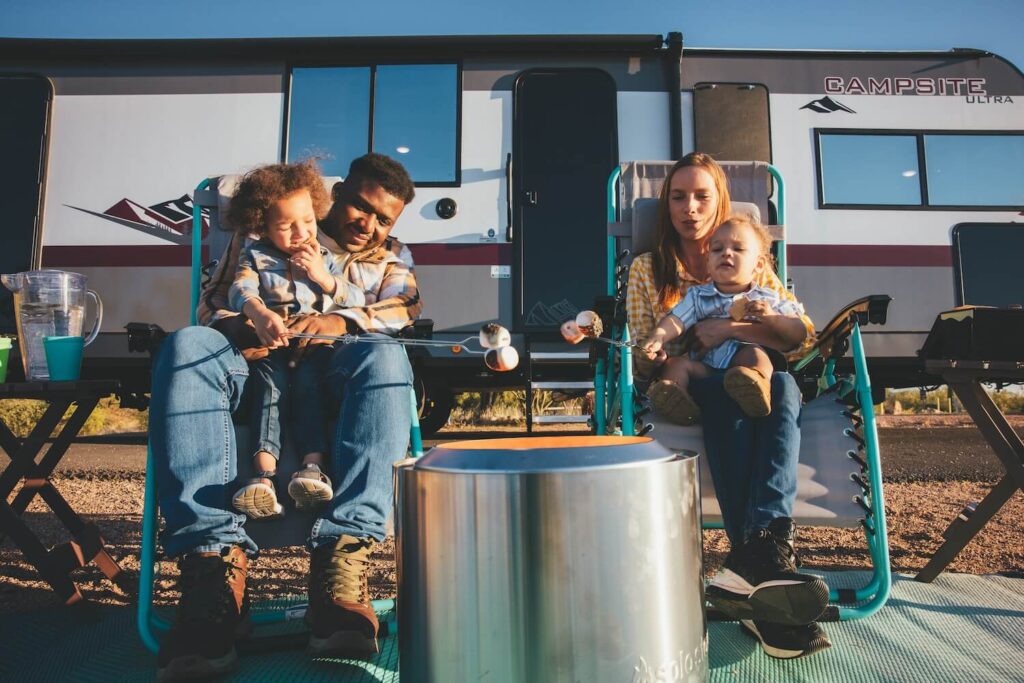
If you’re unfamiliar, we’ve covered the goals of a shakedown trip in a previous post. There, you’ll find tips on how to plan, which tools to bring, and which systems to check. But to bring you up to speed, a shakedown trip—crucial at the start of the year or when you first buy an RV—gives you the chance to check everything functional on your RV. From your water systems to your patio awnings to your tires, you test everything and create a list of any maintenance tasks to address before your season’s longer, more taxing trips.
Shakedown trips are typically close to home and often run about a week. That specific length of time isn’t required—you just need to have enough time for sufficient testing. For example, a single toilet flush is less likely to reveal a problem than a week us steady use. Conversely, running your heating and cooling systems for a long weekend will help you confirm that everything is functioning as it should. Test often and test everything.
The celebrated RV 3-3-3 rule is especially relevant here. Travel no more than 300 miles, arrive by 3 p.m. for ample time to set up your camp, and stay for at least 3 days.
Top 5 Must-Check Items
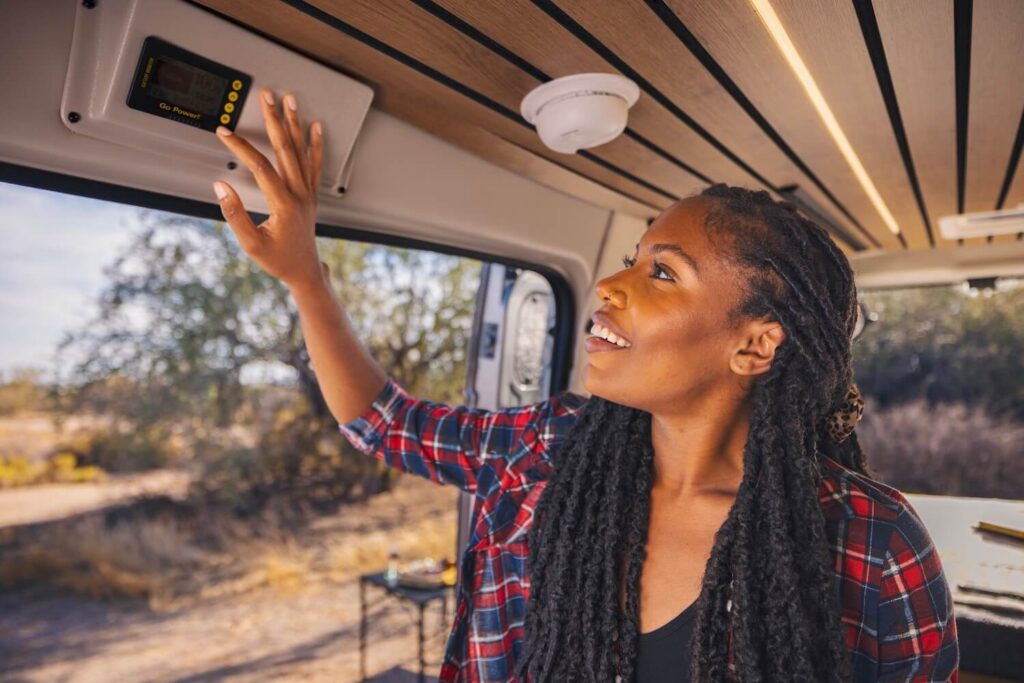
If you’re unsure where to start, we’ve outlined some of the most critical areas of your RV to test, along with a few helpful suggestions for each.
Rinse and Test Water Systems
After sitting all winter, your water system is priority number one. Your mission is to de-winterize by thoroughly flushing the antifreeze from the lines, then running water through every single faucet (hot and cold), the toilet, and the indoor/outdoor showers. Fire up the water heater and test it on all applicable modes (i.e., gas and electric, depending on the model). Keep a sharp eye out for drips or leaks under sinks and around fittings—catching a small leak now can save you from major water damage later.
Verify Battery and Power Connection Health
Next, test your AC and DC power systems. Check your house battery’s charge, plug into shore power to ensure your converter is working, and fire up your generator, if equipped. Once you have power, test your major appliances. Turn on the air conditioner, run the furnace, and ensure the refrigerator reaches the desired temperature on all settings. Don’t forget to test outlets, lights, and fans.
Check Seams & Seals
Winter’s freeze-thaw cycles can be tough on your RV’s exterior. Play inspector and perform a visual check on all seals. Carefully check the sealant on the roof seams, around all roof-mounted accessories like your air conditioner and vent fans, around doors and windows, along slide-outs, and at all clearance lights.
While you’re at it, open and close every window and roof vent. Check for smooth, easy operation and look for any cracks, gaps, or peeling in the sealant. A quick touch-up with the best RV sealant is one of the most effective ways to prevent costly water intrusion.
Test Safety Appliances and Tire Health
Before you go anywhere, a safety check is non-negotiable. Press the test button on your smoke, propane, and carbon monoxide detectors and replace batteries if needed. Check the pressure and manufacturing date on your tires (most should be replaced after 5-7 years, regardless of tread). Finally, locate your fire extinguisher and ensure it’s not expired.
Use Everything!
The goal of a shakedown is to identify and resolve any issues, so don’t be shy! Fully extend and retract your awning. Operate your slide-outs multiple times. Convert the dinette into a bed. Deploy your leveling jacks. Using every component just as you would on a normal trip is the only way to find the little things—a sticky latch, a burned-out bulb, or a stiff mechanism—before they become a bigger nuisance on the road.
So yes, the first trip of the year is an excellent time to check your gear, work out kinks, try everything out, and make sure that your RV is prepped for a full season of travel. Pair this with your spring break vacation plans, and we can narrow what a trip this spring might look like. The big piece? Staying closer to home.
The Benefits of Staying Local
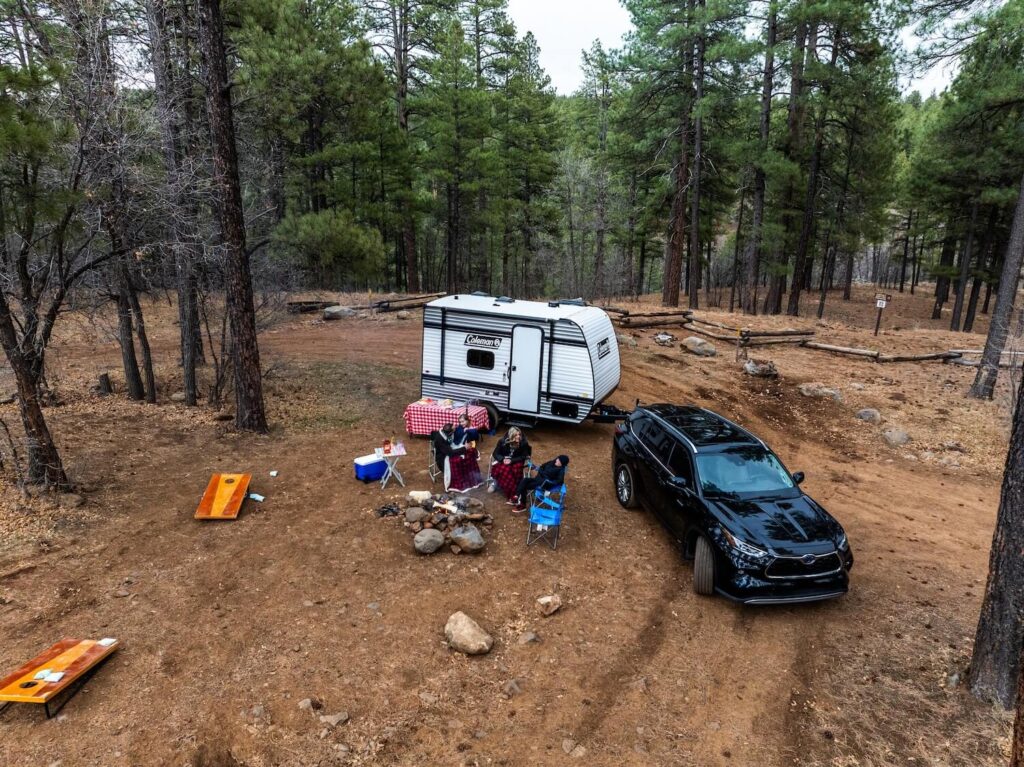
For spring break—and likely your first trip of the season—there’s no need to cross the country. Multi-week road trips are the stuff of legend, but they put serious strain on you and your RV. And frankly, they can be a bit impractical.
In spring, those focused on lower-profile trips have the right idea. These come with many advantages in terms of cost, time at the campground, and having a more meaningful experience when you stay relatively close to home.
Shakedown trips often bring campers back to the same location, year after year, so they know what to expect and can focus more on their RV and less on navigating a new place. It also allows you to learn an area more closely, finding your favorite trails and hikes, the cheapest groceries, and the best taco spots. So, as you plan your spring break shakedown trip, it’s smart to choose a relatively local spot that you can return to frequently.
And remember, you are your own local expert—at least partially. Your local knowledge gives you an advantage when choosing a campsite, scouting locations, or predicting seasonal traffic.
For instance, consider the trend of travelers who now rely on AI tools to help them plan vacations and travel. While generative AI models can certainly help you dial in campground and park candidates that fit your criteria, there’s no substitute for familiarity with an area before scheduling a trip—especially one where you’re not looking for any surprises.
Having knowledge of the area, seasonal traffic, and popularity—and potential hidden gems—is the best way to secure a quiet location for your shakedown trip. And again, it’s nearly invaluable to find a location not too far from home that you can visit year after year.
What Is Local? You don’t have to stay in your own neck of the woods to still be local. We suggest locations between 2-5 hours away.
Beyond spending more time at the campground and saving gas money, there’s also more of a safety net when you camp locally. That makes it easy to try new things. For example, many campers are leaning towards quieter, more secluded camping experiences. And you’ll have a far easier time finding that solitude if you get away from the campground.
If you’re curious about boondocking or off-grid camping, starting somewhere relatively nearby is a big advantage. A local trip (with the right RV) is the perfect combination for boondocking.
Getting Off Grid (While Staying Connected)
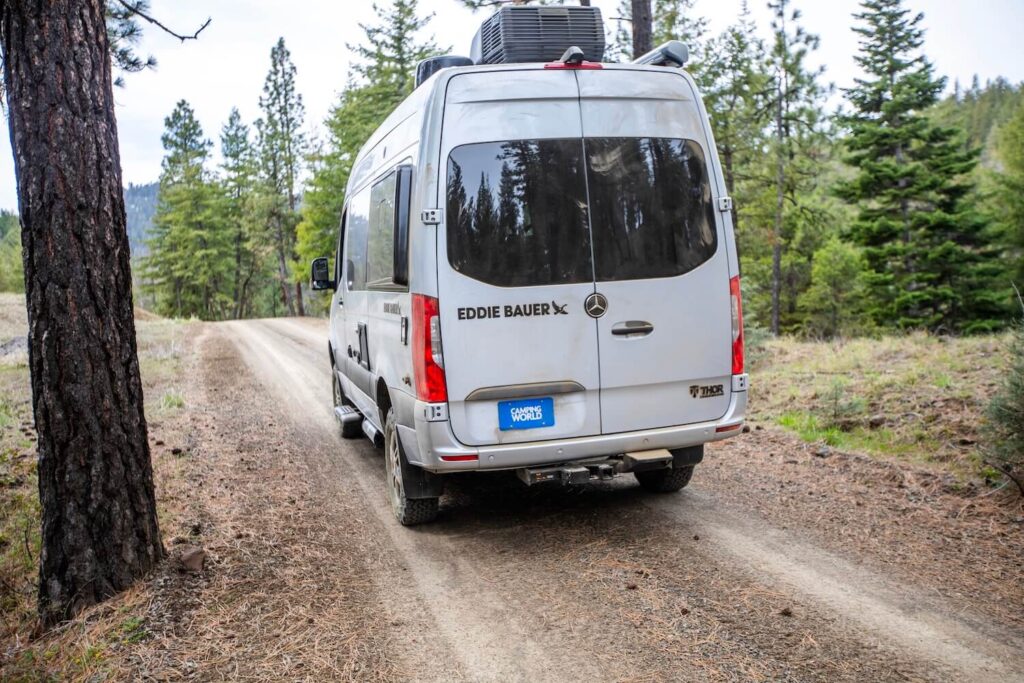
Perhaps reflecting campers’ desire to find remote locations and have more independence, more RV manufacturers are including off-grid and boondocking features, even on some entry-level RVs. While you might shy away from boondocking on your first shakedown trip, you can certainly still test this equipment—and more veteran RVers might consider an off-grid excursion as a part of their spring break travels.
More RVs now come with gear to sustain modest off-grid excursions. Below are examples of the types of equipment and capabilities that make these quick getaways possible.
- Solar Power & Lithium Batteries: Robust solar panel arrays and powerful lithium battery banks allow you to run lights, fridges, and even small appliances without shore power or a generator.
- Larger Holding Tanks: Increased fresh and waste water capacities mean you can stay out longer before needing to find a dump station.
- All-Terrain Capabilities: More rugged tires, increased ground clearance, and improved suspension (on select models) give campers the confidence to tackle the dirt roads that lead to the best dispersed campsites.
However, this growing desire for a quieter, more remote experience doesn’t mean campers want to disconnect entirely. In fact, as millennials and Gen Zers make up a larger portion of RVers each year, they have a vested interest in technology that helps them stay in touch, even while away. Streaming services, apps, entertainment, and the ability to interact with social media are all important criteria—an interest that RV manufacturers have noted.
Along with off-grid capabilities, more campers and RVs have the means to remain connected, even in remote locations.
- The Rise of Satellite Internet: Services like Starlink for RV have been a game-changer, providing high-speed internet in places where cell service is nonexistent. This is what allows for the “work from anywhere” dream. Read more.
- Cell Signal Boosters: For areas with weak but present cell service, a signal booster (like those from WeBoost) can make the difference between 1-2 bars and a stable, reliable connection. Read more.
But even these advancements are somewhat basic compared to some of the developments we see in aftermarket products. More campers are drawn to redundant connectivity, ensuring a connection wherever they go. Advanced aftermarket routers from companies like Peplink and Winegard offer “bonded internet.” This technology combines multiple separate internet sources—Starlink, a 5G cell signal, and campground Wi-Fi—into a single, reliable feed to ensure you are never offline.
The weBoost Drive Reach Extreme RV uses a tall exterior antenna—adjustable up to 40 inches—to capture distant signals. With more than double the uplink power of many standard boosters, it dramatically improves voice and data reliability on all major carriers. The unit is also “5G Ready,” ensuring its functionality for the next decade.
Explore all weBoost Signal Boosters.
But before you go investing in extra tech gadgets, consider the RV you’re traveling in. Some are better suited for future tech connection than others.
The Best RVs for Hybrid Off-Grid Camping
As we stated, an increasing number of RVs are intentionally designed for at least some degree of independent camping. Recently, these select models caught our eye, as they bring the comforts of home to even the most primitive camping spots.
Eddie Bauer 19EB
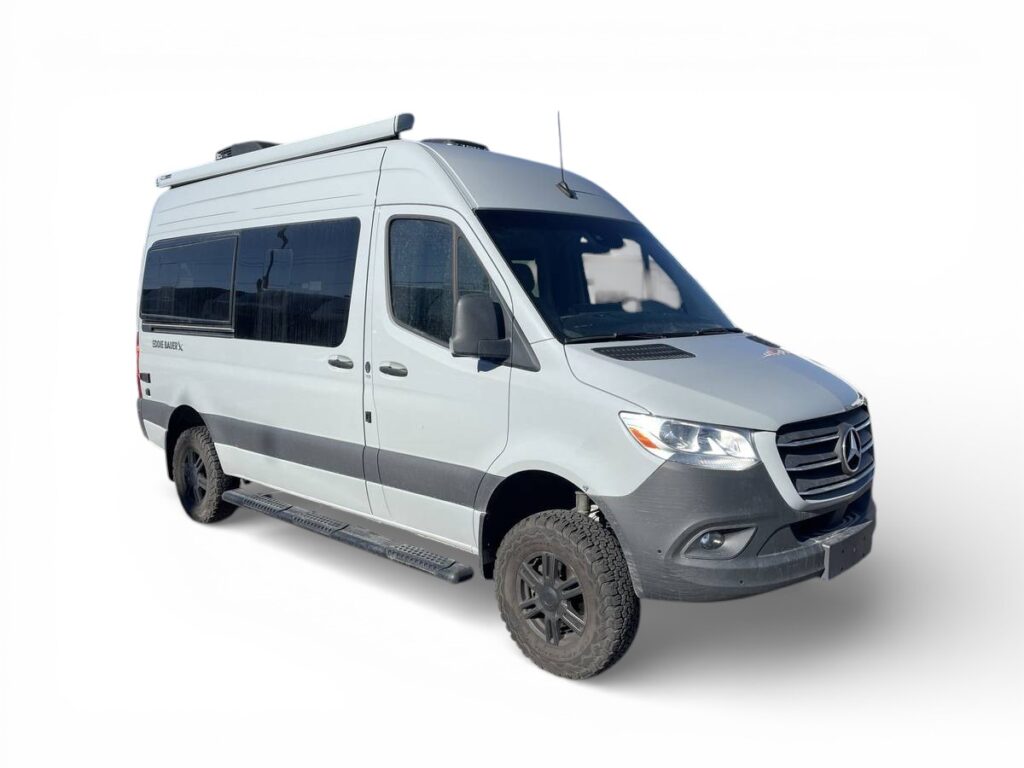
The Eddie Bauer 19EB Class B by Thor Motor Coach is purpose-built for the hybrid off-grid camper. It comes standard with a robust solar power system, providing the energy independence needed to camp far from the crowds. But the standout feature for the modern RVer is the Starlink Exterior Plug – Prep. This dedicated exterior port eliminates the need to run cables through a window or door, making it incredibly simple to deploy your satellite internet and establish a high-speed connection in minutes.
Paired with all-terrain tires and increased ground clearance, the 19EB is a perfect example of an off-road camper that lets you get away from it all without sacrificing connectivity.
Salem Hemisphere 261FKRB
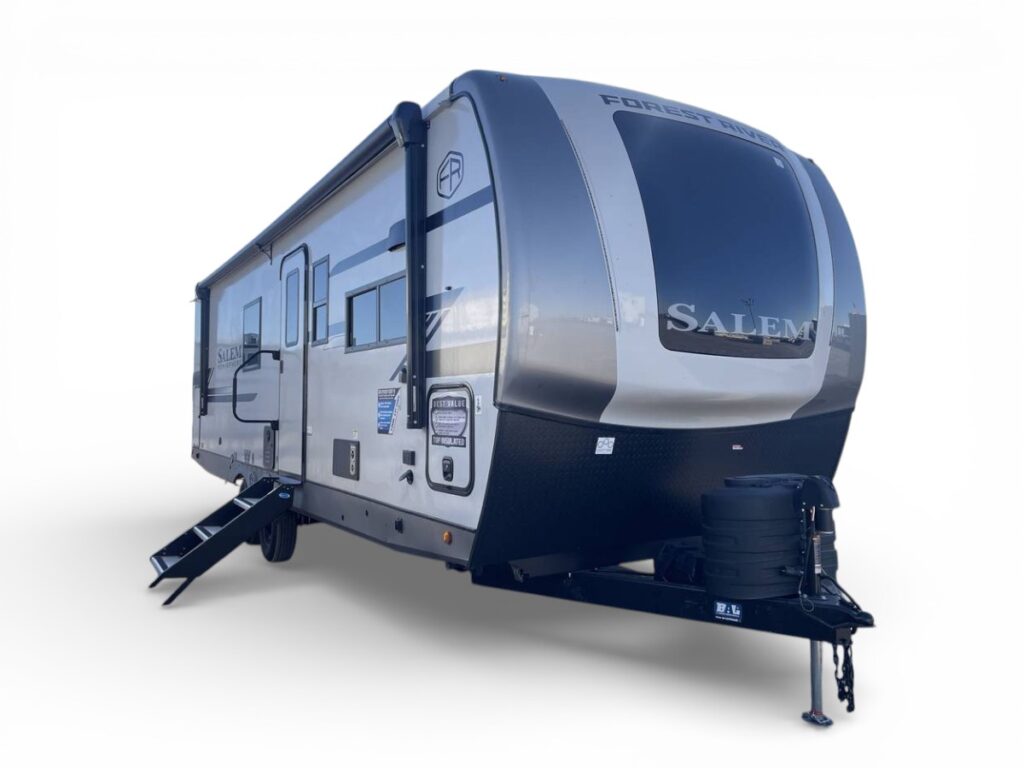
The brain behind the Salem Hemisphere 261FKRB is the Lippert OneControl® app. This system centralizes control of your RV’s core functions—such as slide-outs, awnings, lights, and water pump—directly on your smartphone. This is especially useful when camping off-grid, as you can monitor battery levels and tank status with a quick glance, helping you conserve resources without leaving your camp chair.
With a standard 200-watt solar panel on the roof, the 261FKRB gives you a high degree of control over your environment, making a more independent camping style feel both luxurious and effortless.
Grand Design Solitude 310GK
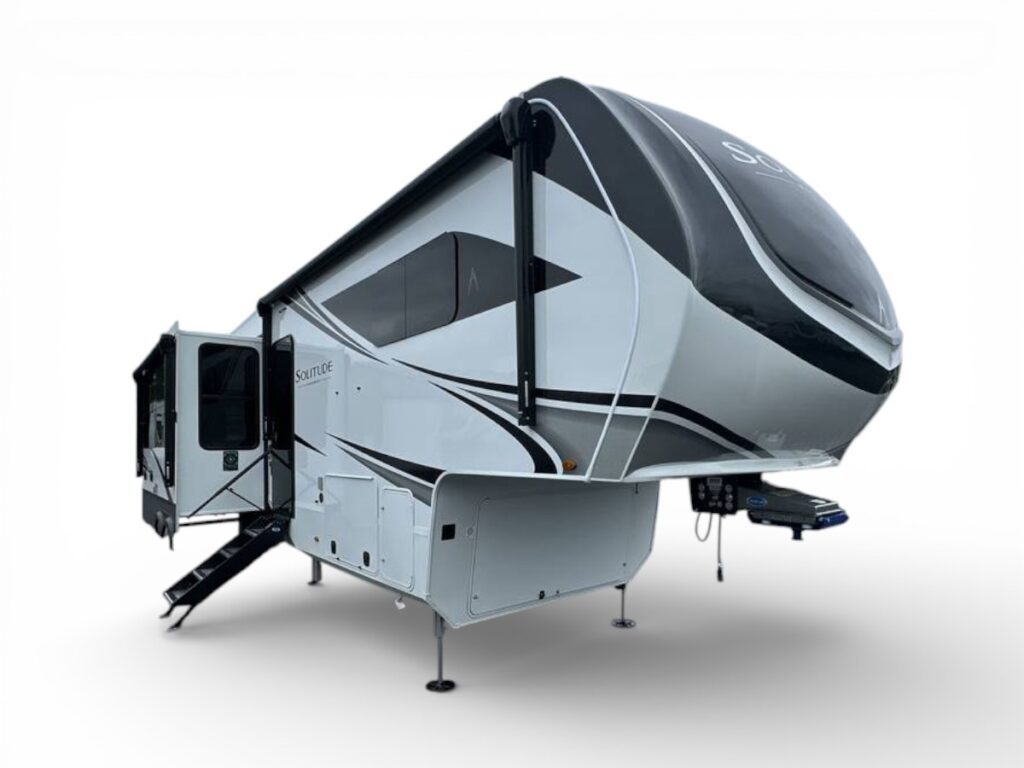
Grand Design’s Solitude 310GK suits those who want to establish a self-sufficient basecamp for extended stays without losing any luxury in the process. Central to this experience is the Grand Design Compass Connect® app, which gives you full command over your luxury rig directly from your smartphone.
This smart control system becomes especially powerful when paired with the Solitude’s substantial solar package, featuring a 330-watt roof-mounted solar panel, a 50-amp charge controller, inverter prep, and more. The entire system—from battery levels to power consumption—is monitored through the app, allowing you to confidently track system health and customize your ideal settings.
Where Will You Camp?

It’s easy to forget that our figurative backyards often contain near limitless options for outdoor adventure. Almost regardless of your home base, you can find spring break shakedown trip options. Where to start? Try reimagining what’s available within a 150 to 300-mile radius. While you may not have access to iconic national parks, you may be surprised by what’s hiding right under your nose.
State Parks & County Parks
State parks are the classic choice for a shakedown trip for a reason: they are accessible, affordable, and offer a variety of camping styles. Don’t just look for a full-hookup site. For a true test of your RV’s capabilities—and a better chance at finding a less crowded location—seek out a park with a “primitive” or “dry camping” loop, or sites with partial hookups. This provides the perfect, safe environment to test solar capabilities, monitor battery usage, and determine how long your fresh water lasts, all with the added safety of being in a managed park.
Discover some of our favorite state parks for RV camping.
Small Towns & Harvest Hosts
Shift your focus and make a charming small town the destination. Find a campground just outside a town known for unique shops, local breweries, or a spring festival. This turns your shakedown trip into a low-stress vacation, allowing you to become a “local expert” and discover hidden gems you’d otherwise drive right past.
For additional local adventures, consider a Harvest Hosts location. Throughout the US, hundreds of wineries, farms, breweries, and museums offer free overnight boondocking for members. It’s the ideal controlled environment for practicing off-grid etiquette and testing systems, all while enjoying a unique local experience.
Campground Booking
Finding the perfect quiet spot is easier than ever with the right digital tools. Instead of just searching for “campgrounds near me,” use the powerful filtering features on some of the best RV camping apps to find your ideal shakedown location. With sites like Good Sam, the Dyrt, and Campendium, you can read reviews from other campers before booking. Look for comments on cell service (AT&T, Verizon, T-Mobile), road accessibility, and how crowded the sites are. You can find real-world feedback on the best and quietest loops.
As a membership club and campground platform, Good Sam Campgrounds offers discounts and a massive directory of vetted, private RV parks and campgrounds. This is an excellent tool for finding a reliable location with specific amenities for your shakedown trip. New to their lineup, you might consider Good Sam Overnights, especially to try out boondocking for a night or two.
Recreation.gov is your portal for booking sites on federal lands, including National Forest campgrounds. It’s an essential tool for planning ahead, especially for more popular locations.
iOverlander and The Dyrt are go-to apps for finding informal and dispersed camping spots. Their user-generated content is invaluable for discovering boondocking locations that may not appear on official maps.
Use any of these tools to explore to find a location that you love, one that you’ll want to return to each year to kick off an exciting season of camping.
Are you planning a Spring Break Shakedown trip? Tell us about your adventure plans in the comments below.
The post Planning the First RV Trip of 2026: Reliable Tech, Local, Low Stress appeared first on Camping World Blog.