If there’s an RV for every kind of camper, Forest River probably builds a version of it. Across its over 80 brands, the company specializes in everything from fold-down tent campers to diesel-pusher motorhomes. Knowing what they build, and under which brands, is a feat in itself. This guide explains who makes Forest River RVs, what Forest River is known for, and how its lineup breaks down by RV type and price, so you can see where to start.
Who Makes Forest River RVs?
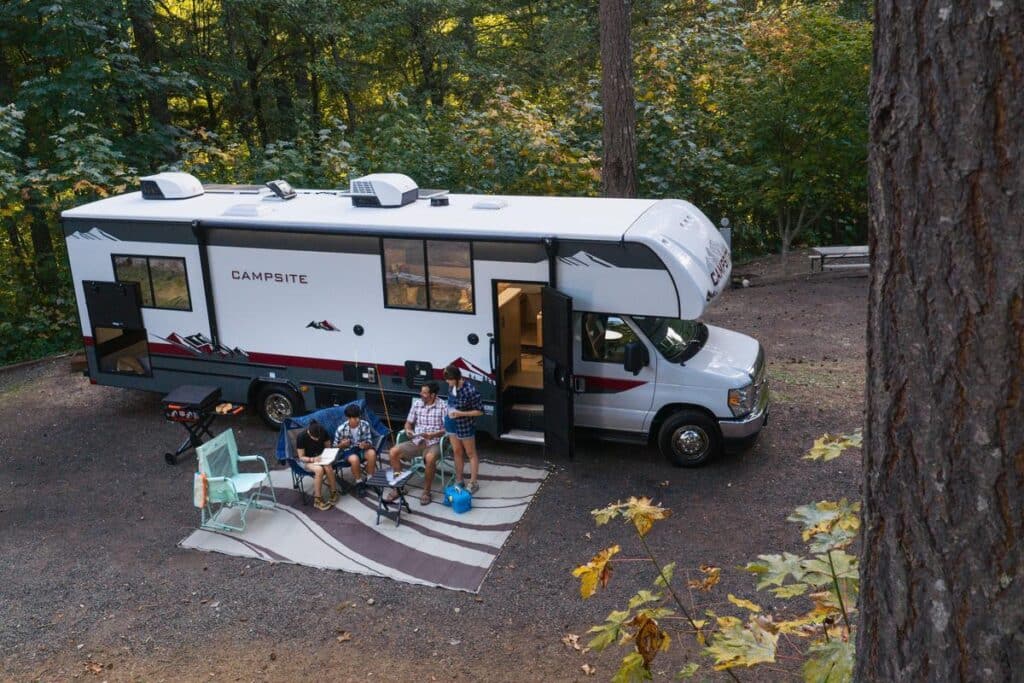
Forest River RVs are made by Forest River, Inc., a Berkshire Hathaway company headquartered in Elkhart, Indiana. Peter Liegl founded Forest River in 1996, and Berkshire Hathaway bought it in 2005. Today, the company builds RVs, buses, cargo trailers, and pontoon boats in more than 100 facilities.
It helps to know that “Forest River” refers to two things. Forest River, Inc. is the parent company. Forest River RV is its namesake RV division, which is the focus of this guide.
Forest River, Inc. also owns RV brands that operate under their own names, with their own websites and lineups, such as Coachmen (which also builds Shasta), East to West, and Dynamax.
Forest River is often grouped with Thor Industries and Winnebago Industries as one of the “big three” RV manufacturers in North America.
Where Are Forest River RVs Made?
Most Forest River RVs are built in northern Indiana, in and around Elkhart County, the center of the US RV industry. Many plants specialize in specific lines. Rockwood and Flagstaff, for example, are built in Millersburg, Indiana. Forest River also runs plants in other states, including facilities on the West Coast that serve western buyers and cut shipping distances.
What Is Forest River Known For?

Few manufacturers offer as many lines at as many price points as Forest River — and that’s by design. Forest River organizes its business into product groups, allowing for greater specialization within each category, such as stick-and-tin travel trailers, laminated trailers, fifth wheels, and motorhomes. Some brands targeting similar markets may even compete with each other.
Construction also varies by line, so you can choose a build style that fits your budget and how you camp. Traditional stick-and-tin trailers keep prices accessible. Laminated, aluminum-framed builds trade a higher price for a stiffer, lighter structure. The premium fifth wheels and diesel coaches add the insulation, residential appliances, and full-time features that long-stay owners look for.
Learn more about aluminum vs fiberglass RV construction.
Is Forest River a Good RV Brand?
Definitive claims made about “Forest River” from a quality standpoint fall short because the company is made up of so many brands. A Cherokee Wolf Pup and a Wildwood Heritage Glen come from the same company, yet they’re built to very different price points, construction standards, and expectations. The fair way to judge Forest River is line by line.
Like any high-volume manufacturer, Forest River has loyal fans and its share of critics. Its entry-level lines are built to hit accessible price points, so they use lighter-duty materials than its premium lines do, and that’s true across the industry. Many Forest River lines have long track records and devoted followings. Rockwood and Flagstaff are examples, and the Forest River Owners’ Group is one of the largest owner communities in RVing.
What Brands Does Forest River Make?
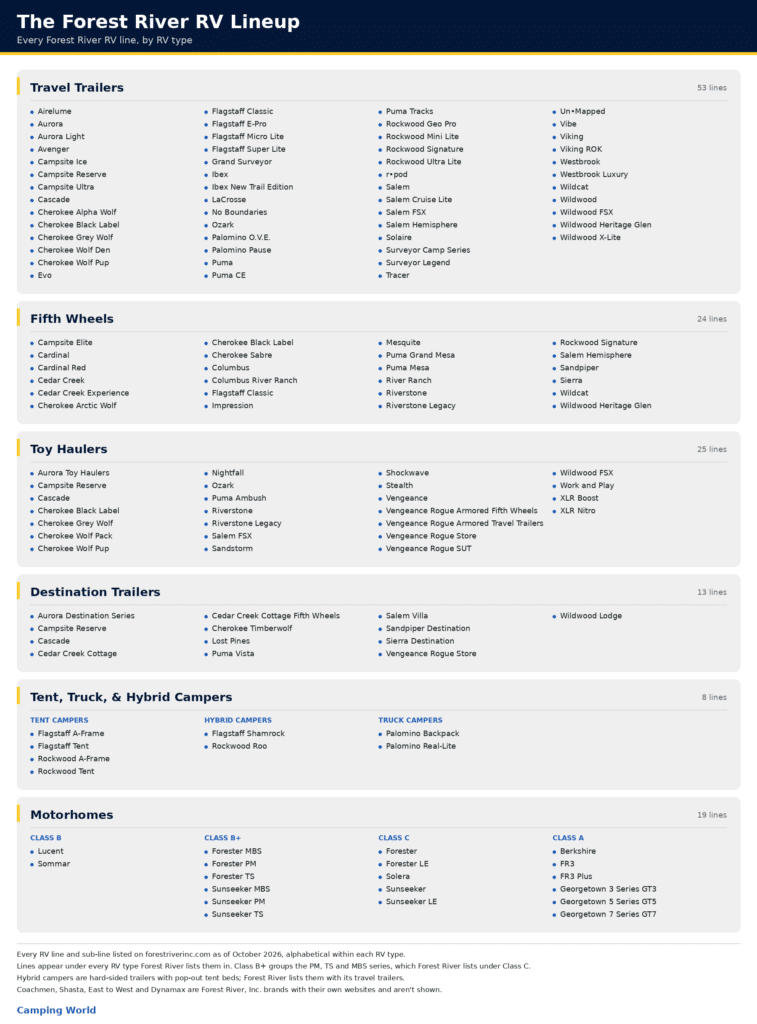
Forest River’s lineup includes more than 120 RV lines and sub-lines, from tent campers and hybrid trailers to premium Class A motorhomes, which makes it one of the broadest in the industry.
The biggest differences between Forest River lines come down to how each is built, not the name on the side. Many value-driven lines, like Campsite Reserve, Cherokee Grey Wolf, and Airelume, use traditional stick-and-tin construction, with aluminum siding over a wood frame, and standard RV-grade furniture and fixtures, keeping prices accessible.
A step up, lines like Campsite Ultra and Cherokee Alpha Wolf use laminated walls over an aluminum frame, which are stiffer and lighter, along with more standard features and upgraded finishes. Many, like the Rockwood Mini Lite and Salem Hemisphere, include an enclosed underbelly with heated holding tanks as standard.
At the top of the lineup, lines like Riverstone add heavier-duty frames, more insulation for cold-weather camping, residential-style appliances and furniture, and finishes built to withstand full-time living.
What Is the Forest River Warranty?
Forest River towables come with a one-year limited warranty for the first retail buyer who purchases from an authorized Forest River dealer. It covers substantial defects in materials and workmanship.
Coverage depends on returning the warranty registration form at the time of purchase.
Appliances like the refrigerator, furnace, and air conditioner carry their own manufacturers’ warranties. Routine maintenance, including resealing and tightening screws and latches, is the owner’s responsibility.
Explore Forest River
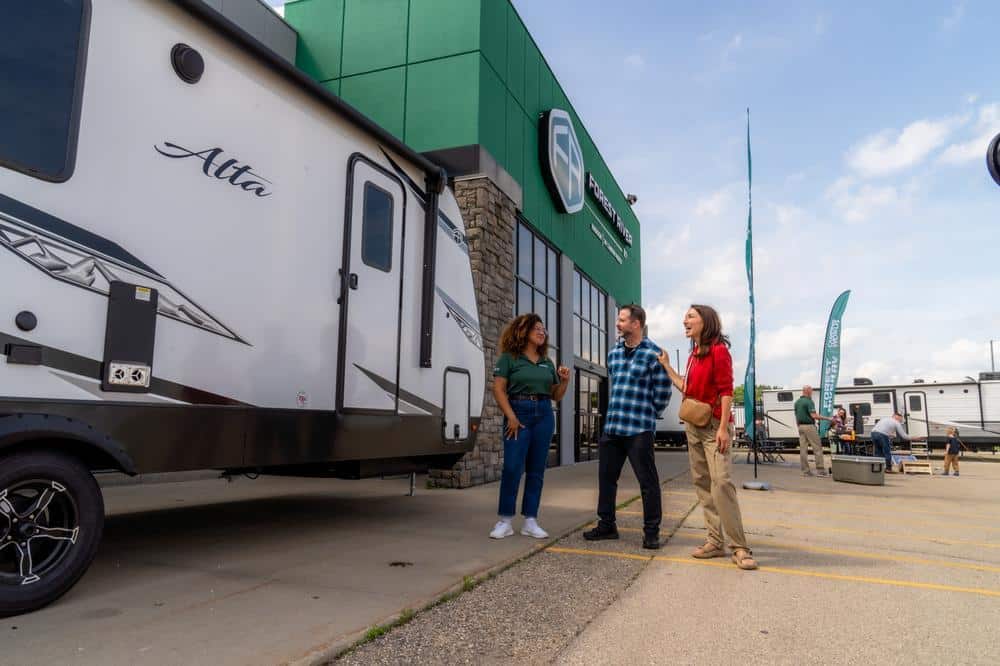
Ready to see the full lineup? Camping World’s brand directory makes it easy to compare Forest River RV types, models, and floor plans before you visit a dealership.
Frequently Asked Questions
A well-maintained Forest River RV can stay in service for 10 to 20 years or longer. Lifespan depends far more on care than on the badge. The biggest factors are keeping roof and window seals maintained, storing the RV under cover, and winterizing it properly, since water damage ends more RVs’ lives than anything else. Premium lines built for full-time use generally withstand heavier use than entry-level lines.
No. Forest River’s limited warranty applies only to the first retail purchaser and doesn’t carry over when the RV is sold. If you’re shopping for a used Forest River, ask whether a transferable extended service plan is available. Our RV warranty guide explains how manufacturer, component, and extended coverage differ.
Start with the authorized Forest River dealer that sold you the RV, or the nearest authorized Forest River dealer if you’ve moved or are traveling. Call ahead, because dealers that didn’t sell your RV may not accept warranty work. If a dealer can’t fix a covered defect, Forest River’s warranty requires you to notify the company in writing so it can arrange the repair itself.
The problems Forest River owners report most often are roof and window sealant that needs regular upkeep, slide-outs that need adjustment, and trim or fixtures that loosen with road miles. These issues are common across the towable RV industry, and routine maintenance prevents most of them.
Curious how Forest River stacks up? Check out our list of the top 10 RV manufacturers.
Do you own a Forest River brand? Tell us which line you chose and what you think of it in the comments below.
The post Forest River Brands by Quality: How the Lineup Compares appeared first on Camping World Blog.