RV TOILETS MAY NOT BE the most glamorous topic. But they are essential for an enjoyable camping experience. If you’re an RV owner, you most likely have a built-in toilet connected to a waste water holding tank. However, many camper vans, pop up campers, and other small trailers are equipped with an RV cassette toilet, which shares many similarities with a portable toilet.
While lesser known, many campers enjoy the flexibility of an RV cassette toilet or a portable toilet. In this article, we’ll explain how each works and why you may consider adding one to an RV without holding tanks or adding to a car or truck camping setup.
Key Takeaways
- Semi-Permanent Cassette Design: A cassette toilet is a permanently installed fixture in an RV that utilizes a small, removable wastewater tank (the “cassette”) instead of a large, fixed black water holding tank.
- Use Case for Portable Toilets: Truly portable toilets are excellent solutions for truck and car camping, allowing you to create a more comfortable bathroom experience in the great outdoors.
- Ideal for Small Setups: While both cassette and portable toilets require more frequent emptying due to their smaller 5-gallon capacity, they are easier to maintain and install, making them perfect for camper vans, small trailers, and solo travelers or couples.
What Is an RV Cassette Toilet?

A cassette toilet—sometimes called an RV cartridge toilet—is a semi-permanent toilet in your RV with a portable black water tank underneath.As mentioned, they’re most common in camper vans, small trailers, and pop up campers. The “cassette” name likely refers to the fact that the small wastewater tank is designed to be removed for emptying, which differs from the built-in holding tanks in larger RVs.
How Does a Cassette Toilet Work?

A cassette toilet functions in much the same manner as a traditional RV toilet. They are typically connected to a water source for flushing, have a handle to control the operation of the ball valve at the bottom of the bowl, and waste empties into a small tank underneath.
In most cases, emptying a cassette toilet requires removing the holding tank and disposing of the contents at an approved dump station. Fortunately, the portable tanks on cassette toilets are relatively easy to transport and empty. They are usually about the size of a suitcase, and many come with rollers. These tanks can be emptied virtually anywhere, including public restrooms, dump stations, and campground hookups.
How Much Waste Does a Cassette Toilet Hold?

Most cassette toilets have smaller capacities than RV holding tanks, typically holding less than five gallons. Thinking about waste in terms of gallons isn’t the most pleasant idea. But it’s important when considering the difference between cassette toilets and traditional RV septic systems.
Compared to RV holding tanks, which can carry anywhere from 15 to 90 gallons of waste, you can begin to understand how using a cassette toilet differs.
Let’s consider a quick example. If you empty your 20-gallon RV holding tank every 3-4 days at your normal usage rate, you can expect to empty a five-gallon cassette toilet holding tank nearly every other day.
Is a Cassette Toilet a Portable RV Toilet?

It’s important to note that a true cassette toilet is used instead of a regular or portable camping toilet. The toilet itself remains permanently installed in your RV, but it has a portable tank that is accessed via a panel underneath the toilet or from an exterior storage compartment.
There are also portable toilets that don’t permanently attach to any location. They may also have a portable tank on the bottom for easier emptying, but some require the use of toilet waste bags to collect waste. These portable camping toilets are more commonly used for car and truck camping, especially when boondocking or in areas without bathroom facilities. When camping with a large group, they can also supplement your RV’s existing toilet.
Put simply, a cassette toilet refers to a model that permanently attaches to your RV and includes a removable holding tank. Portable toilets are those that remain mobile and can be used both inside and outside your camper.
Benefits of an RV Cassette Toilet

The major advantage of this type of RV toilet is its compact size. This is why they are often found on Class B RVs and small campers. Furthermore, they are easier to clean and have less potential for releasing odors due to the need for more frequent emptying.
The small size of cassette toilets also makes them highly portable. For example, when camping off-grid, you’d need to move a traditional RV to dump when your onboard holding tanks are full. With a cassette toilet, you can remove the portable tank and take it to the nearest restroom or dump station, rather than having to move your entire recreational vehicle.
RV cassette toilets also eliminate the need for a larger black water holding tank and RV plumbing. This means less stuff to worry about breaking or degrading over the life of your camper. It also means you’ll have less toilet maintenance and an easier time remedying clogs if they do occur.
Finally, cassette toilets are excellent for those building out a van or renovating a trailer to create a mobile living space. If the initial vehicle you’re renovating didn’t have holding tanks, installing a cassette toilet is much easier than installing all the plumbing found on regular campers.
How To Empty Cassette Toilets and Portable Toilets

Most RVs have built-in sensors in the waste tanks to tell you when they are nearing maximum capacity. The indicator lights for these sensors are typically displayed on your RV’s control panel.
With cassette toilets and portable toilets, the level indicator is usually on the toilet itself. Because they have a smaller capacity, you’ll need to physically check this indicator daily to prevent overfilling.
When the indicator signals your tank is full, follow these steps:
- Clear the toilet bowl.
- Close the valve blade handle.
- Open the panel to access the holding tank. On cassette toilets, this will either be on the side or the front of the toilet. On some campers, the tank is accessed through an exterior storage compartment. On portable toilets, the top section detaches from the holding tank.
- Remove the portable holding tank.
- Carry or roll to a dump location. Acceptable dump locations include the hookups at an RV park, an actual RV dump station, or even a stall at a public restroom.
- Open the dump spout. Some models have a spout that swivels away from the tank, making it easier (and cleaner) to empty the contents.
- Position the spout over the toilet or dump station hole and let gravity do the rest.
- If your tank comes with a pressure release valve, depress it while emptying the contents to release pressure and allow the contents to clear the tank more completely.
How To Clean a Portable or Cassette Toilet
When your cassette toilet’s holding tank is empty, it’s time to clean it out. Place it down on a level surface and pour some water into the tank. Then, close the spout and shake or tip the tank back and forth to swirl the water around inside before emptying it again.
You may need to rinse your tank several times before the water you’re emptying appears clear. Over time, holding tanks can accumulate buildup if you don’t take this step each time you empty their contents. If that happens, you’ll need to use a tank cleaner to remove old residue and neutralize odors.
Which Toilet is Right For You?

Cassette toilets are not necessarily better than regular camper toilets. They simply offer an alternative option for disposing of your sewage waste.
This type of camping toilet might be right for you if:
- You love to camp anywhere and don’t always have access to a dump station (van life comes to mind).
- You’re a couple or solo traveler. If you have more than two people using a cassette toilet regularly, you will likely need to dispose of its contents daily. You’ll want more waste capacity if you’re camping with a larger group.
- You prefer shorter trips to boondocking locations without hookups or bathroom facilities, but don’t mind finding a dump station on your way home.
Whether you choose a portable toilet or an RV with traditional holding tanks, you still have to deal with the waste. Either you use a sewer connection, or you pull out your portable black tank and wave to your neighbors as you roll it over to a public restroom or dump station.
Before you jump on the cassette toilet bandwagon, consider whether you really want to deal with the portable tank. Some people have no problem doing that, but others find it far easier to go the traditional route. The choice is yours, just make sure to think about it ahead of time and discuss it with the person or people who will be camping with you.
RV Cassette Toilet Use and Maintenance Tips

If you decide that a cassette toilet is right for your RV lifestyle, here are a few tips to help you use and care for it:
- Minimize toilet use for solid waste disposal. Use a restroom for #2 when possible.
- Avoid flushing toilet paper. Dispose of TP in a small, dedicated waste bin.
- Close the lid before flushing or opening the valve blade
- Empty it on a regular schedule, even if it’s not full.
- Every 2-3 days if camping with a group
- Every 4-5 days if camping solo or with a partner
- Clean it with water and a splash of distilled white vinegar after each use.
- Deep clean the holding tank with approved holding tank chemicals between trips.
Best Portable RV Toilets and Cassette Toilets
If you’re interested in upgrading your camper’s bathroom facility with a portable option, here are a few models to consider:
Thetford Porta Potti Curve

The Thetford Porta Potti Curve is one of the most popular portable RV toilet options for van life, truck camping, and RVs that lack bathroom facilities. It boasts a 5.5-gallon waste capacity and also includes a 4.2-gallon fresh water tank, providing an average of 56 flushes per fill.
This portable toilet features a battery-powered pump flush mechanism (supplied with six AA batteries) and an integrated holder for your RV-friendly toilet paper. It also features user-friendly levers and level indicators for internal holding tanks, making operation a breeze.
GlareWheel Portable Travel Toilet
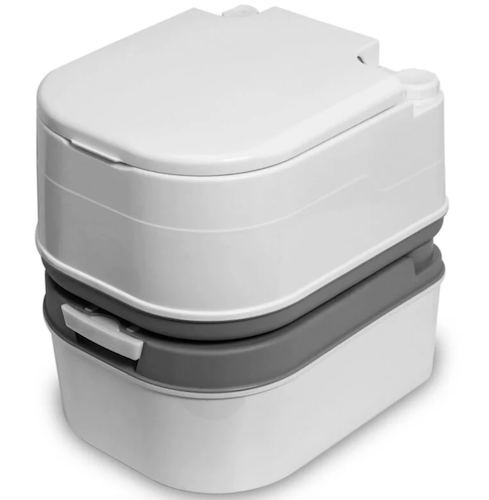
With a compact, versatile design suitable for RVs, car/truck camping, or boating, this GlareWheel model offers a portable, stress-free camping toilet. The holding tank holds up to 6.3 gallons and also boasts a 5.2-gallon fresh water capacity, featuring a hand-pump flushing mechanism.
That’s enough water for up to 40 flushes before you have to empty the contents and refill the fresh water. And speaking of emptying it, the tank easily detaches from the top section, and the spout elbow rotates away from you, allowing you to stay as far away as possible when cleaning it out.
Reliance and Stansport Portable Camping Toilets
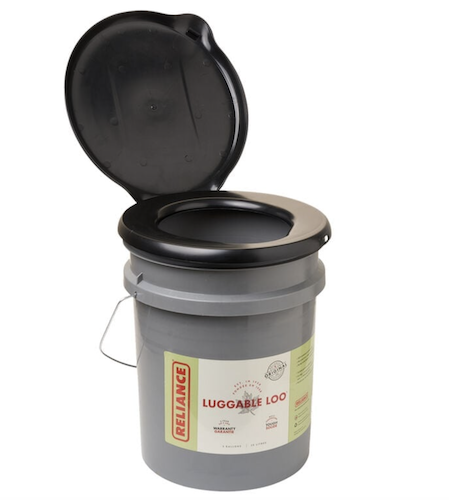
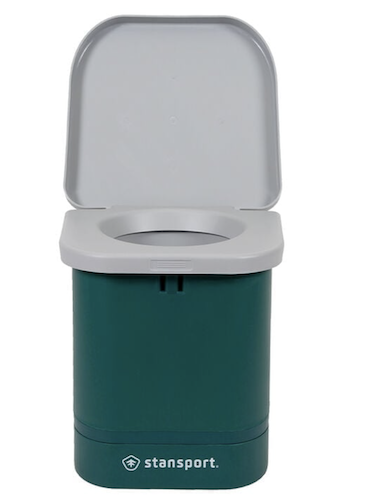
Images by Camping World
These portable toilets are versatile options most commonly employed for truck or car camping. Both require waste bags to capture waste, making disposal feel a bit less sanitary than the other options.
However, these camping toilets offer one very important benefit: affordability. They’re among the cheapest portable camp toilets out there. Plus, both offer incredibly simple designs that you won’t worry about setting up. With seat heights of 13.5 and 14 inches, respectively, they’ll be comfortable enough to handle your business without encouraging you to doom scroll on the loo while everyone waits for your return to the cornhole game.
In the right circumstances, a cassette toilet can be a great substitute for a regular RV toilet. You just need to be aware of the pros and cons to ensure you enjoy a comfortable restroom experience wherever you go.
Would you consider a cassette or a portable toilet for your camping needs? Let us know in the comments below!
The post RV Cassette Toilet vs Portable RV Toilet: Which is Right for You? appeared first on Camping World Blog.