WINTER RV CAMPING is more accessible than ever, thanks to improvements in RV technology and an increase in four-season capabilities. But if you plan to camp in the cold, you still need to prepare accordingly. Here’s what you need to know to keep your camper—and your crew—healthy and happy.
Key Takeaways
- Exterior protection—such as snow removal, preventing frozen jacks, installing skirting, sealing windows, and using safer steps—plus slow, weather-aware driving, ensures both camper longevity and comfortable winter RV travel.
- Winter camping is increasingly popular, thanks to improved four-season RV technology. However, staying safe requires protecting water systems from freezing, managing propane and heat sources, and keeping pipes, tanks, and sewer hoses warm.
- Insulating high-loss areas like floors, windows, doors, roof vents, and the RV underbelly is key to maintaining interior warmth and efficiency, along with safe use of propane furnaces, electric heaters, and proper ventilation practices.
How To Get Water For Winter RV Camping

Protecting your water lines from freezing is arguably the most important factor when winter camping in an RV. When outside temperatures drop below freezing, water can freeze in your pipes and your fresh water hose.
Frozen water expands, which can cause your pipes to burst. Even if your pipes don’t freeze completely, a frozen section can increase water pressure enough to stress pipe joints to the point of bursting.
Unregulated RV water pressure will lead to major repairs when you don’t want to be working on your motorhome or travel trailer. Repairing your RV’s plumbing also comes with a hefty bill. Avoid the expense with a little preparation.
Hooking Up to City Water in Winter
If you’re hooking up to city water when temperatures are at or below freezing, it’s a good idea to use an insulated water hose for your camper. An option like the Camco Freeze Ban insulated water hose plugs into an AC outlet and includes an electric heating element to keep water from freezing at the source while it’s flowing into your RV.
This design is rated for temperatures as low as -20℉ and features insulated sleeves that slide over the hose fittings at the inlet and outlet for added protection.
Some people add insulation to their heated hoses if they know temperatures will remain below freezing for long stretches. This can be done by wrapping the entire length of the hose in foil or foam insulation tape.
Technician Tip: Check the recommendations and read through the manual that came with your heated hose before adding insulation
Filling Your Fresh Water Tank When It’s Cold

If you don’t have a heated hose, you can fill your fresh water tank instead of connecting to city water. Many modern RVs designed for winter camping feature 12V heated holding tank pads or ducted heating into the underneath storage compartments to prevent water from freezing in your tanks.
For older RVs, you can add your own insulation or place a drop light in the compartment. The heat produced by the light can be sufficient to prevent the water in your tank from freezing, unless you encounter extremely cold temperatures.
Technician Tip: Drop lights must use incandescent bulbs rather than LED or fluorescent bulbs to produce heat to warm your tanks. Extreme caution should be exercised to prevent the heat from damaging the coach or starting a fire.
As a general rule, only connect your water hose when filling your fresh water tank. Disconnect it when you’re finished, and drain all water from the hose before storing it. This will prolong the tank’s life and the hose while preventing potential freezing.
How To Keep RV Pipes from Freezing While Camping

So, you have running water in your RV. Excellent, but you’re not out of the woods yet. To prevent your RV pipes from freezing, it’s helpful to open cabinets and allow the heat from your furnace to fill the entire space, not just the central part of the coach.
If your RV doesn’t include tank heating pads or ducted heat to the basement, consider adding a tank blanket. Tank blankets are typically available in 12V DC and 120V AC models, allowing you to choose one that suits your off-grid or on-grid winter RV camping trips.
Technician Tip: It’s best to consult with a local Camping World specialist for assistance on modifications to avoid adding a heater that damages your plumbing.
Additionally, many towable RVs have exposed water lines underneath. These are the most likely candidates for freezing when camping in cold temperatures. An easy way to reduce the risk of exposed water lines freezing is to add foam pipe insulation and wrap it with foam insulation tape.
How To Keep Your RV Sewer Hose from Freezing

It’s best to wait until your holding tanks are full to hook up your sewer hose and empty. This reduces the time the valves are open, allowing heat to escape.
Some RVers who enjoy long-term winter stays leave their sewer hose connected to an outlet for the duration of their stay. If you do this, only open valves and empty holding tanks when they reach at least two-thirds of their capacity.
It’s also a good idea to empty your tanks during the hottest part of the day and ensure the hose is empty after dumping. This may require lifting the hose or using sewer hose supports to ensure it drains completely and minimizes the risk of waste particles freezing in the hose.
How To Prepare Your RV’s Interior for Winter Camping
Winter RV camping should be enjoyable, but that’s tough if you’re perpetually cold. Fortunately, we have plenty of tips to keep your living space warm and cozy throughout the winter.
Insulating RV Floors
Just like at home, RV floors often feel extra chilly in the morning. Fortunately, there are several ways to insulate the flooring in your camper, adding insulative properties and making your feet more comfortable.
These range from as simple as laying down interior rugs or runners to installing self-adhesive carpet tiles to adding rugs to your RV steps. Use the link below to explore all your options.
How To Insulate RV Windows and Doors
The next two obvious places for heat loss are your RV windows and doors. An RV with dual-pane windows is best for winter camping, but there are ways to insulate single-pane windows if your budget doesn’t allow for that upgrade. Here are a few ideas:
- Add made-for-RV foil insulation panels
- Upgrade to thicker window shades
- Add pre-sized covers/sunshades to doors and front windows
- Check weather stripping and replace if partially detached or missing.
If you can’t find exact matches for all your windows and doors, you can purchase a foil insulation roll and cut squares to the needed dimensions. While you can, most winter campers don’t cover ALL their RV windows, so they can still enjoy natural light and heat from the sun during the day.
Technician Tip: Exercise caution when installing window insulation to prevent blocking the weep holes or causing them to become obstructed with ice. The condensation will back up and run down the walls inside your RV if you’re not careful.
Preventing Heat Transfer Through Roof Vents

Because you won’t necessarily need RV roof vents for air circulation during the winter, consider installing insulated vent cushions to reduce heat loss further.
Vent cushions can also be used during the warmer months to trap cool air inside your RV, making them an excellent investment for conserving energy when boondocking. These roof vent cushions are relatively affordable and easy to install or remove.
Electric vs Propane Heat Sources

You’ll have three primary RV heating options when RVing in winter. The first is your RV propane furnace. The second is an RV-safe portable electric space heater or fireplace—if your RV is equipped with the latter. And the third—and least recommended—is a catalytic heater or a portable Buddy heater that relies on a small propane cylinder.
Now, before you go grabbing each of these options for camping during the winter, let’s talk safety, maintenance, and proper use.
RV Furnace Tips
Before your winter camping trip, take the time to have your furnace professionally inspected. This will help you avoid a costly and inconvenient trailer furnace repair. Ask a certified technician if you need a furnace filter replacement (if applicable) to ensure adequate airflow and efficient operation throughout the winter.
Technician Tip: Never install a filter on a furnace that was not equipped with one by the factory.
At the very least, you should use compressed air and a soft brush to remove dirt, dust, and debris from the furnace. Ensure all vents are clean and unobstructed. Perform a test by setting your RV thermostat to the desired temperature and measuring its effectiveness with a digital thermometer.
RV Electric Heating Tips
Electric fireplaces and portable space heaters can supplement your RV furnace if you’re plugged into AC power all winter. They can even help you save propane in your RV and lower your energy bill, depending on the electric costs in your location.
The issue with space heaters is that they heat the living space above the floor, causing the furnace thermostat to shut off the furnace. Only a ducted gas furnace will send heat to your RV’s underbelly. The heated tank spaces are no longer heated if the furnace is off.
Technician Tip: Portable space heaters can also overwhelm your coach’s electrical system if used simultaneously with multiple other RV appliances. This may result in inconveniences, damage to the coach, or even fires. Avoid models with a maximum wattage rating exceeding 1,500 watts and turn them off before powering on other high-draw appliances, such as your microwave.
Portable RV Propane Heater Safety
Finally, using a portable propane heater poses several safety risks. You must ensure the heater is safe for indoor use, and you’ll need extra propane cylinders to make this a reliable heat source for winter camping.
The issue with propane space heaters is that they can increase condensation, potentially leading to a hazardous accumulation of carbon monoxide. They should never be used in a tightly sealed RV, so you’ll need to crack a window and use a dehumidifier to avoid moisture issues, both of which can render these ineffective for efficient RV heating.
External vs Onboard Propane
When winter camping, you’ll burn propane faster than usual. Your onboard propane container(s) supply propane to your stove, oven, central furnace, and water heater. Refilling propane is essential for maintaining warmth and comfort during cold weather.
For travel trailers and fifth wheels, propane cylinders can be disconnected, exchanged, or refilled at local hardware or grocery stores. Just know that small portable LP containers are subject to refrigeration in cold weather.
Technician Tip: In cold weather, small LP containers seem to run out of gas when they’re only half empty. Keeping your containers above half full is your best bet for a reliable propane supply when winter camping.
For motorhome owners, your options include either moving your RV to a fill station or finding a propane fill service that comes to you. Depending on your location and style of winter camping, both can be treacherous on winter roads.
For full-time campers, an external propane tank can be installed outside and, in many cases, hooked into your RV’s propane lines. This requires a propane adapter kit and a propane company to deliver and attach an external tank.
Call multiple propane providers in your area to compare prices and services. If given the option of “Keep Full” or “On Call” service, “Keep Full” will eliminate the hassle of running out of propane because you forgot to check the level regularly.
How To Protect the Outside of Your RV
From removing snow from the roof to preventing stabilizing jacks from freezing to the ground, there are some important steps to protect your RV’s exterior during winter adventures.
Protecting Your Roof, A/C, Slide-Outs, and Awnings
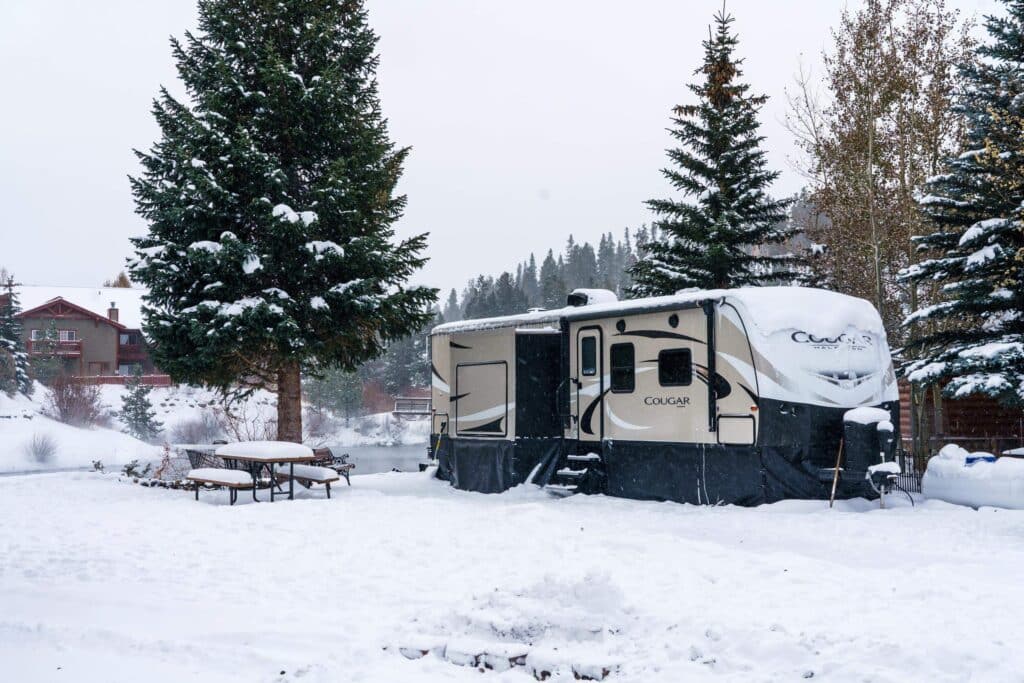
Avoid snow and ice accumulation on any part of your RV. No matter how cold it is, the best way to protect your RV when winter camping is to push the snow off after each storm. This includes your slide-outs and all covers for your air conditioner, roof vents, and other roof-mounted accessories. The goal is to protect everything from the added weight of snow and ice.
Technician Tip: Your best bet in heavy snow events is to close slide-outs until the storm passes.
When removing snow and ice, be careful to avoid damaging your roof or awnings. A broom with soft bristles will help you clear a light dusting, but you may need a plastic shovel for the top layer of larger accumulations, before using the broom to push the bottom layer off.
Climbing up your RV ladder can be the most dangerous part of this effort. Shoes with soft rubber soles are best for handling slippery surfaces. If possible, ask a partner or friend to spot you. However, be aware that a harness and fall protection are the only true ways to guarantee your safety when climbing on a fully walkable RV roof.
We also want to note that it’s best to leave your main RV awning closed when camping in your RV in the snow. The weight of snow and ice, combined with the potential for high winds, increases the risk of awning damage in the winter.
If your awning is damaged, consult our RV awning maintenance guide for information on removal, installation, and awning fabric replacement.
Lastly, consider installing a cover over your air conditioner, as you will most likely not use it in the winter. An insulated RV air conditioner cover protects the unit from damage while keeping out those dreadful winter drafts.
Technician Tip: DO NOT install an A/C cover when your coach is in use if your units have a heat pump.
Preventing Stabilizing Jacks From Freezing to the Ground
To keep RV stabilizing jacks from freezing to the ground, place wooden blocks, leveling blocks, or stabilizing jack pads beneath them. If you store recreation items under your RV, place them on a tarp or in sealed bins to avoid water damage.
Insulating an RV Underbelly

Using an RV skirt provides an additional layer of insulation for the open space beneath your RV. A skirt can keep your floors, holding tanks, and vehicle components warmer when outside temperatures drop below freezing.
Portable or long-term insulated skirting makes a massive difference in comfort and efficiency. Any warmth you can trap inside your RV or underbelly works to your advantage.
An added benefit of skirting your RV is protected exterior storage. If you have kayaks or bikes that don’t have anywhere else to go, slide them under your RV before skirting to keep them out of the elements.
Technician Tip: RV skirting can make an attractive home for critters. Use insect and rodent deterrents to keep them at bay throughout the winter.
How To Make Exterior RV Steps Safer

Your convenient RV step can quickly turn into a slippery hazard in freezing conditions. The best way to add grip is to install wraparound step rugs. You can also install an external handrail for added safety when entering and exiting your RV in the winter.
Technician Tip: Choose step rugs carefully. The open styles with aggressive textures are best suited for winter camping, as carpet styles can still become icy in cold, wet weather.
Inspecting RV Window Seals

You should also check the status of your RV’s exterior window seals. If you haven’t addressed them in a few years, adding caulk or sealant might be helpful before winter camping in your RV. Many of these products have temperature limits that must be adhered to, so please check the manufacturer’s instructions to ensure proper use.
There are several caulk and sealant products available for RV maintenance, designed explicitly for resealing around your RV’s windows. Ideally, find a non-sagging or quick-drying product so you can complete this job quickly without making a mess.
Technician Tip: Consult your owner’s manual for recommendations on compatible sealants for your RV.
Driving Tips for Winter RV Camping

If you aren’t full-time winter camping in one place, you’ll need to navigate wet and slippery roads between destinations. Here are a few tips for safe winter RV driving:
- Get all-weather tires.
- Check the weather early and often, especially when navigating mountain passes.
- Accelerate and decelerate more slowly than normal.
- Avoid quick lane changes and turns, which are always bad ideas in an RV.
- If chain restrictions are in place, don’t go.
- Consider investing in traction boards to help you self-rescue if you get stuck.
- If you feel uncomfortable with the weather conditions, stay put.
- Slow and steady wins the race.
Plan ahead and enroll in a roadside assistance program to know help won’t be far off if you need it.
Choosing the Right RV for Cold-Weather Camping
Even with careful preparation, winter comfort ultimately comes down to the RV you bring into the cold. Not every travel trailer or fifth wheel is engineered for colder temperatures, and choosing the right platform makes all the difference in how much effort you’ll need to stay warm, protect your plumbing, and keep systems running efficiently.
When evaluating a winter-capable RV, look for:
- Enclosed and heated underbellies to protect tanks and water lines
- Heated holding tank pads or ducted basement heat
- Improved insulation values in walls, roofs, and floors
- Dual-pane windows or upgraded cold-weather window packages
- Furnace capacity sized appropriately for the RV’s square footage
- Four-season or “extended season” designations backed by clear manufacturer claims, not just branding
Even within these categories, there’s a wide range of capability. If you expect to camp regularly in cold temperatures, starting with the right construction is far easier than trying to retrofit a lightweight, warm-weather coach for winter use.
And if you’re not sure where to begin, we’ve gathered the best options to point you in the right direction. Whether you’re leaning toward a travel trailer or a fifth wheel, these guides break down manufacturers, insulation methods, key cold-weather features, and what separates true four-season builds from others.
Use these additional resources to protect and enjoy your RV in the winter:
- How To Winterize a Camper
- Build a DIY RV Winterization Kit
- What Is an Ice House Camper?
- Do You Need Camper Tire Covers?
- What Makes a Four-Season RV Camper?
Do you have experience camping in your RV during the winter? Share your advice with fellow RVers in the comments below!
The post Winter RV Camping: How To RV in the Cold appeared first on Camping World Blog.