RV thermostats make it easy to adjust your camper’s interior temperature. For many RVers, it’s an overlooked component until it stops functioning as expected. Whether you drive a motorhome, tow a travel trailer, are new to RVing, or have a specific issue, here’s everything you need to know about your RV thermostat.
What Is an RV Thermostat?

RV thermostats are switches that turn your A/C or furnace on and off at specified temperatures, thus regulating a camper’s interior temperature. Most RV thermostats require 12-volt DC power, which separates them from residential thermostats and is an important difference to keep in mind if you’re shopping for a replacement.
Some get DC power from the control board in the air conditioner’s ceiling assembly and open or close the control power to a relay. These relays send 120-volt AC power to the air conditioning unit or DC power to the furnace. Some furnaces supply their own DC power to the thermostat, which simply opens or closes the furnace circuit. No RV furnaces utilize 120-volt AC power.
Smaller RVs generally have one thermostat. Larger campers will have multiple heating and cooling zones. While RV refrigerators and water heaters have their own temperature-control sensors, this guide focuses on thermostats for RV heating and cooling systems.
Are There Different Types of RV Thermostats?

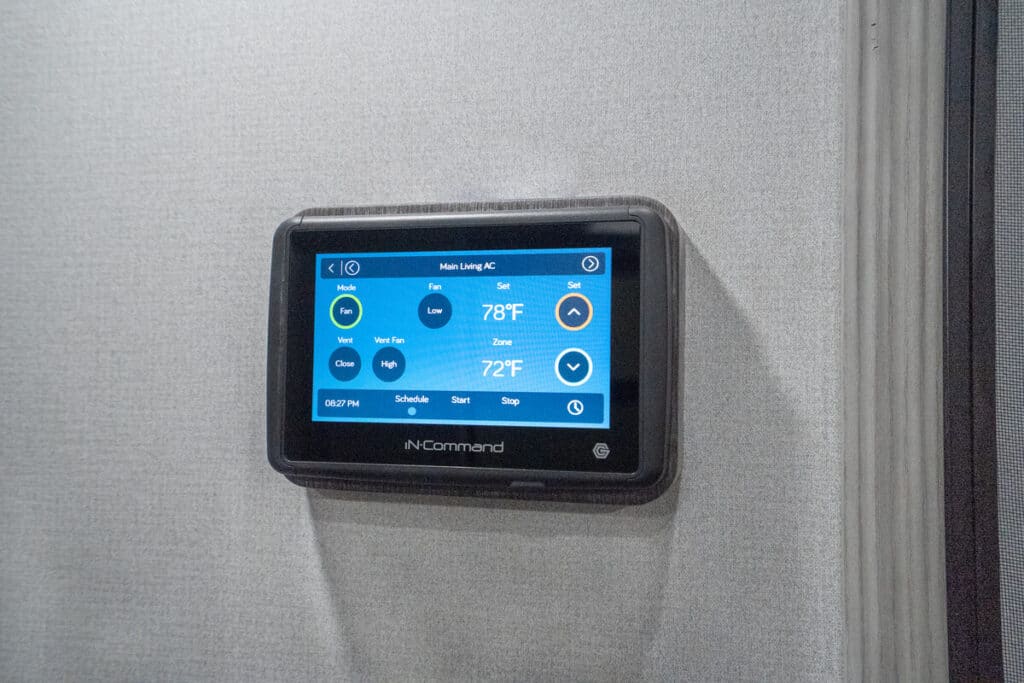
Images by Camping World
The main types of thermostats you’ll find in RVs are analog, digital, programmable, and smart.
- Analog — The simplest, most cost-effective to replace. They utilize a heat-sensitive metal that bends when the temperature rises or falls.
- Digital — Similar to those in residential homes. They use electrical temperature sensors to measure your RV’s temperature and relay the results to the display so you can adjust settings accordingly.
- Programmable (Digital) — Allow you to schedule heating and cooling changes using preset temperature ranges, reducing energy use by running the furnace or A/C only when you’re inside.
- Smart — Digital, programmable devices with modern features such as Bluetooth® connectivity. Most allow you to connect a smartphone to adjust settings remotely.
Our Picks for the Best RV Thermostat
Looking for the best RV thermostat? Here are our top picks.
Dometic® Standard Single Zone Thermostat

Type: Digital
This Dometic® thermostat is best for smaller campers with a single cooling zone. It’s compatible with ducted and non-ducted rooftop air conditioners. It features optional Bluetooth® technology, allowing you to operate it remotely from the Dometic® app on your Apple or Android device.
Furrion® Chill Enhanced Single Zone A/C Thermostat
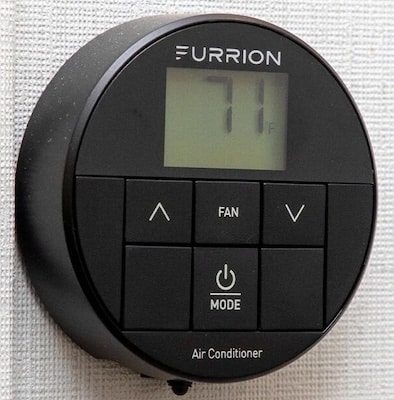
Type: Digital
This Furrion® thermostat pairs a clean digital display with straightforward controls, making it a solid single-zone option for smaller RVs. It offers two fan speeds, an auto fan mode to hold your set temperature, and a dry mode to help manage humidity. The backlit LCD display stays easy to read in low light.
Coleman Mach® Wi-Fi Thermostat
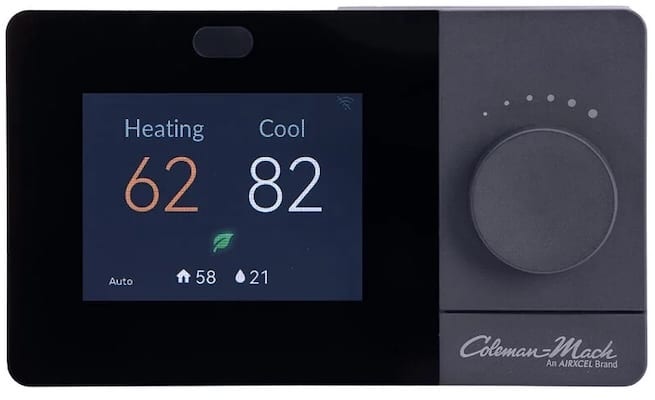
Type: Smart, Digital
This smart Coleman Mach® RV thermostat connects to a Wi-Fi network and gives you three modes, plus access to local weather, humidity, and interior temperature. It’s compatible with most Coleman Mach® air conditioners and heat pumps, making it a natural upgrade.
GE® RV Single Zone Wall Thermostat
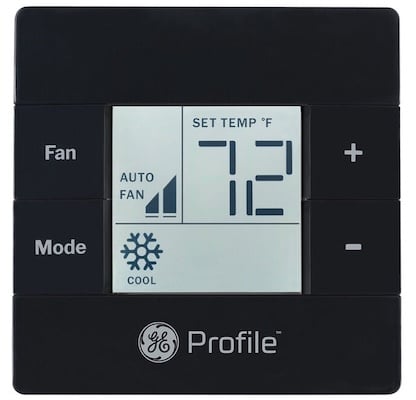
Type: Digital
This GE® thermostat gives you precise control over a single-zone RV air conditioning system, with a sleek black design that fits most RV interiors. It’s built for reliable day-to-day operation and easy installation, making it a solid choice if you want a dependable single-zone replacement without smart features.
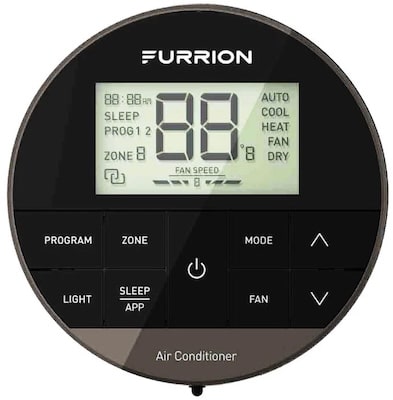
Furrion® Chill Enhanced Multi-Zone A/C Thermostat
Type: Smart, Digital
Built for RVs with multiple cooling zones, this Furrion® thermostat adds Bluetooth® app control to its multi-zone capability. You can adjust each zone from your phone in addition to the soft-touch display. It offers three fan speeds, an auto fan mode, and a sleep mode for quieter nighttime operation, and it’s compatible with Furrion® Chill rooftop AC units, multi-zone controllers, and air distribution boxes.
Can You Put a Smart Thermostat in an RV?
So long as it’s designed for RV use, you can install a smart thermostat in your camper. However, these won’t be off-the-shelf products from a big box store. They’ll only work if specifically made for use with the A/C and furnace in the RV by the A/C manufacturer.
One example is the Easy Touch by Micro Air, an aftermarket smart thermostat that promises to “replace all major brand A/C thermostats without losing any features.” This is a claim, not a guarantee, and the use of aftermarket components will generally void existing warranties.
That’s why we recommend trusting the diagnosis, repair, and, if necessary, replacement of your RV thermostat to a certified RV technician.
How Do I Reset My RV Thermostat?

IIf your thermostat isn’t working, it may need a simple reset. It’s a good idea to explore this possibility before deciding it’s time to purchase and install a replacement RV thermostat. The exact process of resetting your thermostat depends on the manufacturer.
While the exact methods for each step vary by manufacturer, an RV thermostat reset generally requires the following three steps:
- Turn off the thermostat.
- Wait for the manufacturer’s recommended time period.
- Turn the thermostat back on.
With digital, programmable, and smart thermostats, a full reset may erase any preset ranges or climate control settings. You may need to reprogram your settings after a reset to ensure your RV’s heating and cooling systems work as desired.
If a thermostat reset doesn’t restore cooling, see our full guide on RV ACs not cooling.
How To Troubleshoot an RV Thermostat
On average, RV thermostats last 10-15 years. Here are the main issues that warrant an RV thermostat replacement:
- The furnace or A/C runs continuously without cycling
- The set temperature doesn’t match your RV’s actual temperature
- The display is dim or blank
- The display temperature doesn’t change once your A/C or furnace runs for a while
- It’s completely unresponsive or has lost power
All of these issues are typically linked to a lack of power, faulty wiring, or a faulty thermostat. Some basic tests can help you narrow down the issue before deciding on a replacement:
- Confirm the thermostat has power. Most RV thermostats run on 12-volt DC power. Check your battery voltage and the relevant fuse if the display won’t light up at all.
- Set the thermostat at least 5°F away from the current room temperature (colder for AC, warmer for the furnace) to give it a clear signal to engage.
- Listen for the compressor or furnace igniter to respond within a few seconds. If nothing happens, the thermostat may not be sending the signal.
- If you have a spare or known-good thermostat of the same type, swapping it in temporarily is the most definitive test. If the A/C or furnace responds normally, the original thermostat is likely the problem.
Additional testing, such as checking voltage at the thermostat’s wiring terminals with a multimeter, is best left to a certified technician. Improper testing procedures and/or misreading a live circuit can lead to personal injury, a misdiagnosis, or damage to other components.
How to Tell If Your Dometic® Thermostat Is Bad
Dometic® RV thermostats show up in everything from entry-level travel trailers to high-end motorhomes. They can fail in a way that’s easy to mistake for a bigger problem: the display looks completely normal, but the signal that tells the compressor to actually start cooling never gets sent. The fan runs, the air stays warm, and nothing you adjust on the thermostat seems to change anything.
A few signs point specifically to the thermostat rather than the AC unit:
- The display shows a set temperature and appears to respond to button presses, but the compressor never engages.
- The thermostat works fine in one mode (like fan-only) but not another (like cooling).
- On Comfort Control Center (CCC2) models, the display shows an error code instead of a normal temperature reading. Check your Dometic® manual or support app for the meaning of the specific code.
If you’re troubleshooting a Dometic® AC that won’t cool, it’s worth ruling out the thermostat before assuming the compressor has failed. The thermostat is a much less expensive fix.
Our Dometic® & Coleman Mach® AC repair guide covers brand-specific resets and error codes.
How To Replace an RV Thermostat
Like most RV appliance replacements, the exact method for replacing parts will depend on your RV and the design of the part you’re replacing. Still, here’s the overview of the process:
- Remove the thermostat’s fuse from your electrical control panel. This typically requires a gentle touch with needle-nose pliers. There should be no power to the thermostat when working on it.
- Remove the faceplate from the thermostat’s housing.
- Photograph the wiring connections for later reference.
- Loosen the wire connection screws and remove the wiring. This will typically require a small flathead screwdriver.
- Remove the thermostat housing screws holding it to the wall.
- Take the housing off the wall and gently pull the wiring through the back of the housing.
- Stow or throw away the old thermostat housing to avoid confusing it with your new unit.
- Carefully feed the wires through the new thermostat’s housing and arrange them by their respective terminals. Use the photo you took earlier for reference.
- Connect each wire to the appropriate terminal and tighten the set screws. Gently pull each wire to ensure the set screws are properly tightened to prevent movement.
- Reattach the thermostat housing to the wall and reinstall the faceplate.
- Replace the thermostat’s fuse in your RV’s electrical panel. The thermostat’s display should immediately light up.
- Test the new thermostat.
As mentioned, the exact methods and details required at each step vary by thermostat make and model. Given the integral role it plays in regulating your RV’s heating and cooling systems, we highly recommend entrusting the replacement of a broken thermostat to a certified RV technician.
Technician Tip: If an upgrade to a more modern or feature-packed thermostat is required or desired, conversion kits may be needed to match the existing wiring and communication systems.
Frequently Asked Questions
No, the thermostat you choose must be designed for RV electrical systems, which don’t use the same power source as most residential thermostats. They must also be designed for the exact make and model of your RV’s air conditioner and furnace. They are not interchangeable. Standard residential thermostats cannot be installed in an RV because they require a source of 24-volt AC power that isn’t present in RV electrical systems. RV thermostats must function whether or not your unit is plugged into shore power (AC). That’s why they’re designed to work with 12-volt house battery power.
Like any electronic component, RV thermostats wear out over time. Most last 10–15 years, but factors such as extreme temperature fluctuations, power surges, and general age can cause them to fail sooner. Common signs include a display that won’t light up, a set temperature that doesn’t match the actual temperature, or an AC/furnace that runs continuously without cycling. If you’re seeing any of these signs, a reset is worth trying first—see the reset section above—before assuming you need a full replacement.
If the AC still won’t cool properly or the furnace still won’t heat after a proper thermostat replacement, it’s possible the problem was never with the thermostat. While we’ve provided several troubleshooting guides to help you pinpoint the issue, a professional RV thermostat diagnosis is the fastest way to find the real cause.
A working thermostat is integral to your RV’s air conditioning (and heating) systems. If you’re having AC issues, here’s our full guide to RV AC troubleshooting.
What questions do you have about RV thermostats? Let us know in the comments below.
The post Guide to the Best RV Thermostats (+Troubleshooting Tips) appeared first on Camping World Blog.