Is it time to winterize your RV yet? The question comes up for RV owners every fall, and the answer depends more on the thermometer than the calendar. Whether your rig is in storage or still in use is also a factor. You have to get the timing right to protect thousands of dollars in plumbing from a repair bill that can dwarf the cost of winterization. Get it wrong, and the consequences can be significant. Here’s exactly when to winterize an RV, broken down by temperature, region, and month.
When Should You Winterize Your RV?
Winterize your RV before nighttime temperatures in your area consistently drop to or below 32°F — some experienced techs err on the side of caution and recommend 40°F as the safer threshold. The word “consistently” matters, and it means for more than one day in a row. By the time you see “freeze warning” on your weather app, your window to act without risk has narrowed. The goal is to winterize while overnight lows are still above freezing.
If your RV will be stored and unused through the winter, winterize as soon as you’re done using it for the season, regardless of the forecast. RVs stored outside or in unconditioned spaces are more vulnerable to unexpected cold snaps than those in covered storage, and actual temperatures at your storage facility may differ from the forecast.
Travelers should also consider the temperatures along their route, not just at their starting and ending locations. Ignoring sub-freezing temperatures along the way can cause an RV that was in perfect shape when it left to be damaged by the time it reaches the next destination.
This guide focuses on when to winterize your camper and what else needs to happen before you close up for the season. You’ll find a link at the bottom to our complete step-by-step winterization tutorial when you’re ready.
What Temperature Requires RV Winterization?

Why 32°F? That’s the freezing point of water, and water expanding as it freezes is what causes damage. Most RV water lines use PEX tubing, which has some flexibility and can absorb a modest amount of expansion. But the fittings, valves, faucet housings, and water pump that connect those lines cannot. Neither can your water heater tank (or the heat exchanger lines in tankless designs). A single sustained freeze event — even one hour or less — is enough to crack any of these components, and the damage often isn’t visible until you pressurize the system in the spring.
There’s an important difference between a brief temperature dip and a sustained freeze. A short overnight dip to 30°F on an otherwise mild fall day is a very different risk than temperatures holding at 28°F for 12 hours or more. The low point drains, the city water and tank flush inlets, outside showers or kitchens, and the water heater are all fully exposed to that freezing air and will almost certainly experience some degree of damage.
Technician Tip: You might believe you avoided damage because nothing fell to pieces or cracked open. But, in reality, fittings and valve bodies were stretched. Not enough to completely fail, but in the spring, a faucet drips, an elbow has a tiny little leak, or the pressure relief valve on the water heater has a constant drizzle running down the side of the RV. Many chalk this up to “wear and tear” or “cheap components”, but it’s really freeze damage that could have been prevented by winterizing earlier.
Here’s a practical rule: If you’re done camping for the season, go ahead and winterize. And if you can’t get to it right away, do it when temperatures start to dip below 40°F. Waiting until it’s already at freezing temperatures puts your RV’s plumbing at significant risk.
Stored vs in-use RVs: An RV that is actively lived in and heated has natural protection that a stored, cold rig lacks. Running the furnace keeps some warmth flowing through the enclosed underbelly of most modern RVs, providing a meaningful buffer on mild freeze nights. But this protection disappears when the RV sits cold in storage.
When to Winterize Your RV by Region
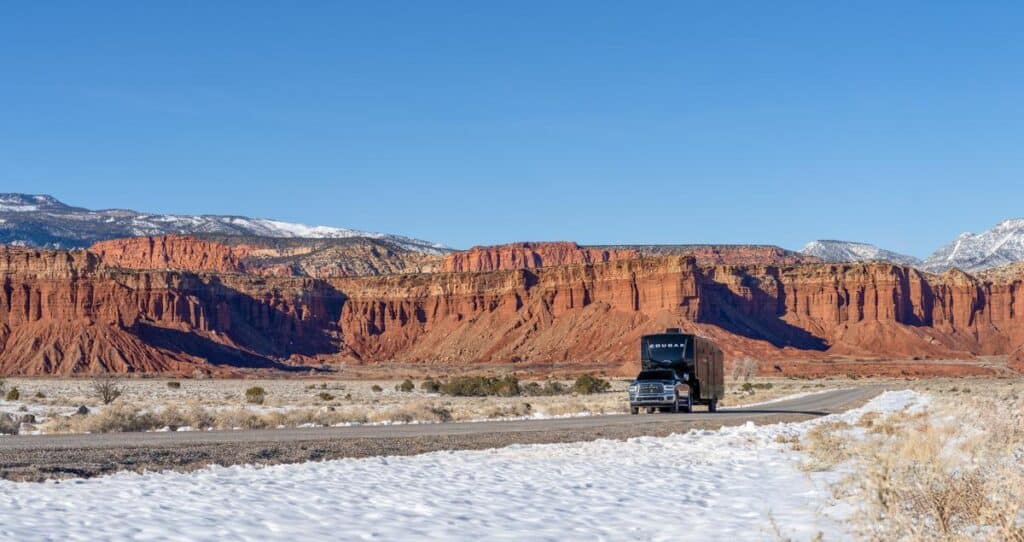
The same date that means “early preparation” in Minnesota means “probably fine for another month” in Tennessee. Use the regional guide below to find your target window, then verify against your local extended forecast and the actual temperatures in your region.
| Region | Typical First Freeze | Target Winterization Window |
|---|---|---|
| Northern & Mountain States | September-October | September for high elevations Mid-October at the latest for most |
| Midwest & Mid-Atlantic | October-early November | Late October for most owners |
| South & Southwest | November-December | Accurate for average years Watch for cold snaps |
| Pacific Coast & Mild Climates | Varies or rarely | Base decision on forecast, not calendar |
Northern and mountain states (Maine, Vermont, New Hampshire, New York, Minnesota, North and South Dakota, Wisconsin, Montana, Idaho, Wyoming, and high-elevation areas throughout the West) see first freezes in September and October. Owners in mountain regions, where overnight lows can drop hard and early, should winterize by the end of September. Most others in this zone should have it done by mid-October.
Midwest and Mid-Atlantic (Ohio, Pennsylvania, Indiana, Illinois, Michigan, Missouri, Iowa, Nebraska, Kansas, Virginia, Maryland) typically see first freezes in October through early November. Late October is the right target for most owners in this zone. If you’re still camping through October, monitor nightly lows closely and have a service appointment or DIY plan ready to execute quickly.
South and Southwest (Texas, Oklahoma, Arkansas, Tennessee, North and South Carolina, Georgia, Alabama, Mississippi, New Mexico, Arizona) have variable winters, and some owners in this zone go years without winterizing. But there are also mountainous areas throughout this region, where heeding local forecasts is more imperative. And freeze events happen almost anywhere in the US. When they do, they’re the unexpected, fast-moving cold snaps that catch unprepared RVs.
The February 2021 Winter Storm Uri is the clearest example: RV owners across Texas and the broader South who had never needed to winterize before faced burst water lines and cracked water heaters as temperatures dropped into the single digits. If your RV is stored where you can’t monitor it daily during a cold snap, winterizing is the lower-risk choice, regardless of the forecast.
Pacific and Gulf Coasts and milder climates (coastal California, coastal Oregon, Florida, Hawaii, coastal regions of Alabama, Mississippi, Louisiana, and Texas) represent the clearest case where winterization may genuinely not be necessary. If overnight lows in your storage location reliably stay above freezing throughout the winter, your plumbing isn’t at risk. The keyword is “reliably” — if there’s meaningful uncertainty, winterize. The cost of doing so is far lower than the cost of fixing freeze damage.
Month-by-Month RV Winterization Guide
Not sure what you should be doing right now? Here’s a month-by-month planning guide from late summer through the end of the year.
August is earlier than most owners think to start winterizing, but it’s the right time to act if you’re in a northern state or at elevation. Monitor the extended forecasts 2-3 weeks out. If you see a September freeze in your future, start planning. More importantly, August is a great time to schedule fall service requests, especially if you want to have your RV professionally winterized. Booking early gives you the best availability and the most flexibility.
September is the action month for northern and high-elevation owners. If you’re in a high-latitude state or a mountainous region, your target winterization date may already be in view. Confirm your service appointment now if you’re going professional. If you’re DIYing, gather your winterizing supplies.
October is the prime winterization month for most of the US. If you’re still camping on fall weekends, watch your nightly lows closely. The transition from “fine for now” to “need to act” can happen quickly. If you have a service appointment booked, confirm it. If you’ve been meaning to book and haven’t, do it now. October availability at most service centers fills fast.
November is the last-call window for owners in transitional climates (the mid-South, the lower Midwest, and the higher elevations of the Southwest). If you’re in North Carolina, Tennessee, Arkansas, or similar, and you haven’t winterized yet, November is the time to do it without relying on another warm stretch.
December marks the start of the contingency season for mild-climate owners. If you’re in coastal California, central Texas, or the Deep South and haven’t needed to winterize yet, keep an eye on extended forecasts for the rest of the winter. Southern cold snaps tend to arrive without much warning and can be surprisingly severe. Have a winterization plan ready to execute quickly, whether that’s a service appointment or supplies on hand.
RV Winterization Checklist: Everything to Do Before Storage

Winterizing the water system is the most critical step before storage. We’ve covered that in our full winterization guide linked below, but this checklist goes beyond plumbing to ensure your entire RV is ready for winter.
Exterior
- Exterior washed and inspected. Look for cracks in seals, gaps around windows and doors, or roof damage that could admit moisture during storage
- Roof seams and seals inspected and resealed if needed
- RV cover (and tire covers) applied if storing outdoors
- Tires checked and inflated to storage pressure; tire covers added for UV protection
- Where applicable, use the RV jacks or a floor jack with jack stands to lift some of the weight off the tires during prolonged storage to avoid flat spots.
- Awning fully retracted, clean, and dry before storing
- Fresh water hose disconnected and stored
Electrical & Battery
- Coach battery disconnected or connected to a battery maintainer. Disconnecting prevents discharge; a maintainer keeps the battery ready for spring. If possible, remove the 12V battery and store it indoors to protect it from extreme temperatures.
- Batteries removed from small devices (remotes, smoke detectors, CO detectors, sensors)
- Main breaker turned off; shore power disconnected
Interior
- All perishables removed from refrigerator, freezer, and pantry
- Remove all liquid items such as shampoos, drinks, and canned soups
- Refrigerator and freezer doors propped open to prevent mold and odor
- Electronics removed if storing in extreme cold (TVs, tablets, GPS units)
- Linens and soft goods stored or sealed if moisture is a concern in your storage environment
- Remove dry goods that may act as a food source for critters
- Mouse and rodent deterrents set — traps, deterrent pouches, or sealed entry points — especially important for outdoor or uninsulated storage
- Valuables and important documents removed
Propane
- All propane appliance valves closed
- Propane connections and supply hoses inspected for cracks or wear before storage
Generator (Motorhomes)
- Generator winterized, per manufacturer’s instructions
- Generator fuel stabilizer added if applicable per your manufacturer’s recommendations
For more info, see our complete guide to RV storage, which includes indoor vs outdoor storage options, tips on RV covers, and long-term maintenance recommendations.
Book Your RV Winterization Before the Rush
Once you know your target window, make your winterization plan. If you’re going the professional service route, you’ll need to book early. Owners who secure their appointments in August and September don’t scramble in October. Those who wait until they see a freeze in the forecast often find the next available appointment is after the weather they were trying to beat.
Book before you think you need to. That’s the most effective step you can take to make sure your RV is protected before the first hard freeze.
Frequently Asked Questions
If your RV will be stored or left unused in an area where temperatures drop below 32°F — even briefly — yes. Even a small amount of residual moisture in a line, fitting, or water heater tank can cause a component to crack. Repairing damage from a single freeze event can cost hundreds to thousands of dollars. If you’re actively using your RV through the winter and keeping it heated, standard winterization isn’t required, but additional winter camping prep is. If the rig is sitting in outdoor storage through a northern winter, it’s not optional.
If there’s any chance your RV will sit cold in sub-32°F conditions, winterize it before that happens, even if you plan to use it again. De-winterizing and re-winterizing is far less costly than a burst water line. If you’re actively camping with the furnace running and nighttime lows in your area remain above freezing, you may not need to winterize yet, but other precautions (listed in the winter camping prep article linked above) may still be necessary.
If you’re in a region where overnight lows reliably stay above freezing throughout the winter, your plumbing isn’t at meaningful risk, and full winterization may not be necessary. But “warm climate” can be subjective. Texas, Arizona, the Carolinas, and much of the South experience occasional freezes. Those events can be more severe than you might expect, particularly because the infrastructure isn’t designed for cold. If your climate is mild but not guaranteed to stay above freezing, winterizing is the low-risk choice. The cost of winterizing is predictable; freeze damage is not.
As long as you’re done using the RV for the season, there’s no downside to winterizing early. Antifreeze in the lines provides stable protection through the winter and doesn’t degrade in sealed plumbing. The only scenario where “too early” becomes a practical issue is if you winterize and then decide to use the RV again, which means you’d need to de-winterize, use the rig, and re-winterize before storage. If this is a common issue for you, it would be a great reason to install the necessary bypass kit(s) to winterize and dewinterize quickly and easily yourself at an affordable cost.
Dewinterize when your area’s last hard freeze has reliably passed, overnight lows are consistently staying above 32°F, and the extended forecast shows no freezing temperatures ahead. For most northern owners, that’s April or May. Mid-Atlantic and Midwest owners are often clear by late March or early April. Southern owners may be ready as early as February or March, depending on the year. When in doubt, wait. De-winterizing your RV too early and having a late freeze can create the same issues as not winterizing at all.
Want to make sure you’re ready when the time comes? Learn How to Winterize an RV.
What’s your rule of thumb for when to pull the trigger on winterization? Share it in the comments below.
The post When to Winterize Your RV: A Regional Guide appeared first on Camping World Blog.