RV furnace maintenance comes down to two things: simple checks and cleaning you can do yourself before each season, and a professional inspection at least once a year. Regardless of how long or how frequently you camp, that routine keeps your furnace running safely and reliably.
Over their lifespan, RV furnaces collect dust, debris, and even nests built by insects and critters, all of which affect how well and how safely they run. Here’s what to check, what to clean, and what to leave to a certified technician.
How Often Should You Service Your RV Furnace?
Plan on a professional furnace inspection at least once a year, plus a few simple checks of your own throughout the season.
Once a year, by a technician. Furnace manufacturers recommend annual preventive maintenance by a qualified RV technician, or more often depending on how much you use your furnace. Full-time RVers and anyone camping through the winter should lean toward more frequent service.
Before each season, by you. Run through the checks in this guide any time your RV comes out of storage. To streamline things, add these steps to your dewinterizing routine.
Monthly while you’re using it. Take a quick look at the exterior furnace vent for soot or blockages.
Book your professional inspection before you need heat. Service departments get busy once temperatures drop, so scheduling ahead of your first cool-weather trip saves you from waiting for an appointment with a furnace that won’t light.
How To Check That Your RV Furnace Works

It is a good idea to run the furnace every few months simply to check its function. Sitting for long periods without being used is a common cause of failure. The goal isn’t just to confirm it turns on. It’s to catch small problems before they become bigger issues, and before you’re counting on it to heat your coach.
Before you fire it up, press the test button on your LP/CO detector to make sure it’s working. Our guide to RV safety equipment explains how these detectors work and when to replace them.
Start by turning on your furnace normally. If you need a refresher, here’s how to turn on an RV furnace. It should run through its normal startup sequence: the fan first, then the igniter and burner, then warm air.
If you aren’t familiar, learn what normal furnace operation looks like before proceeding.
Once it’s running, let it go for several minutes and check the following:
- Sounds. Note any high-pitched, grinding, or rattling noises.
- Smells. A dusty smell when you first run your furnace each season is normal. It’s dust or debris burning off in the furnace or ductwork, and it should fade within a few minutes. A lingering smell is not normal. If you smell propane, stop. Turn off the furnace immediately
- Airflow at every vent. Walk through your RV and feel for warm air at each register. A weak or cold vent can indicate a blocked or crushed duct, sometimes due to a nest built during storage.
- A normal shutoff. Turn the thermostat down and make sure the burner shuts off. The fan will keep running briefly to cool the furnace, which is normal.
Technician Tip: If you smell propane, STOP. Turn off the furnace and seek furnace troubleshooting assistance. That guide also has advice on what to do if your furnace doesn’t start, won’t light, or blows cold air.
How To Clean Your RV Furnace
You can safely clean your furnace’s exterior vent and the area around the furnace yourself. Internal components, like the burner and combustion chamber, should be cleaned by a technician.
Before you start, turn off the furnace and let it cool if it has been running. Never work on your furnace while it’s on, and never block or modify the furnace vents or vent covers in any way. Also ensure that the valves on top of propane containers have been fully closed.
Cleaning Your RV Furnace’s Exterior Vent
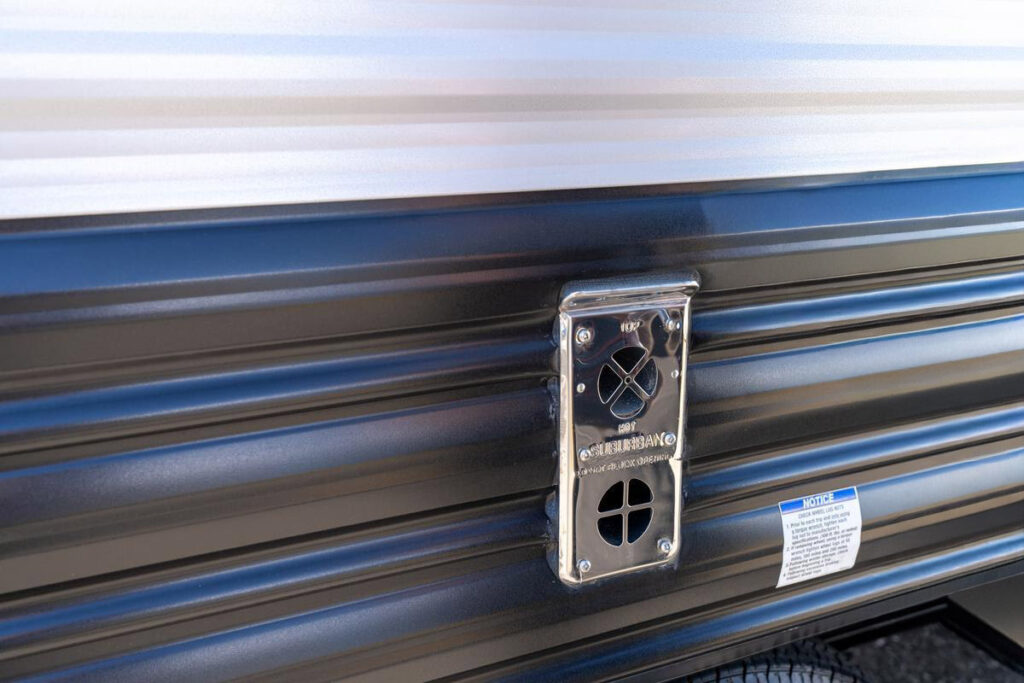
If your RV has been sitting for a while, insects and critters may have nested inside your furnace vent. Debris in the vent restricts the air your furnace needs to burn cleanly.
After ensuring the furnace is off and the LP supply is closed, here’s how to check and clean the vent:
- Remove the screws securing the vent cover to the body of the furnace.
- Use a flashlight or headlamp to look inside the vent for nesting materials, debris, or soot.
- Remove any debris. Don’t spray water into the vent, but you can wipe it out with a damp cloth.
- Gently use an air compressor — set to a maximum of 30PSI — to blow out loose particles farther back in the vent, then reinstall the cover.
Soot is a different story. A buildup of soot around the vent usually means the burner isn’t getting enough air to burn cleanly. Don’t run the furnace until a technician has inspected it.
Keeping the Area Around the Furnace Clean

The more debris builds up around your furnace, the more likely it is to work its way into the furnace, vents, and ductwork. Keeping the area around your RV furnace clean and clutter-free is one of the best things you can do to maximize its lifespan.
A few times a year, and more often if you travel with pets, vacuum out any debris that has collected around the furnace body and the return-air vent. You can reach some furnaces from inside your RV, usually by removing the return air vent cover or by accessing them behind a faux drawer or cabinet door. Others are easier to reach by removing an exterior panel.
After vacuuming, use a damp cloth to wipe away remaining dust. Don’t use too much water, and don’t spray cleaning solutions directly onto the furnace or its components, as this can cause damage.
Finally, keep the space around your furnace clear. The furnace compartment isn’t storage space, and rugs, blankets, or gear covering floor registers or the return-air vent restrict the airflow your furnace needs.
Technician Tip: Avoid ammonia-based cleaners on or near copper or brass gas line fittings. Ammonia can corrode copper and, more importantly, can cause stress corrosion cracking in brass (the common material for gas fittings). Use mild, non-ammonia, non-chloride cleaners instead, and always rinse thoroughly and dry the area.
Leave Burner Cleaning to a Technician
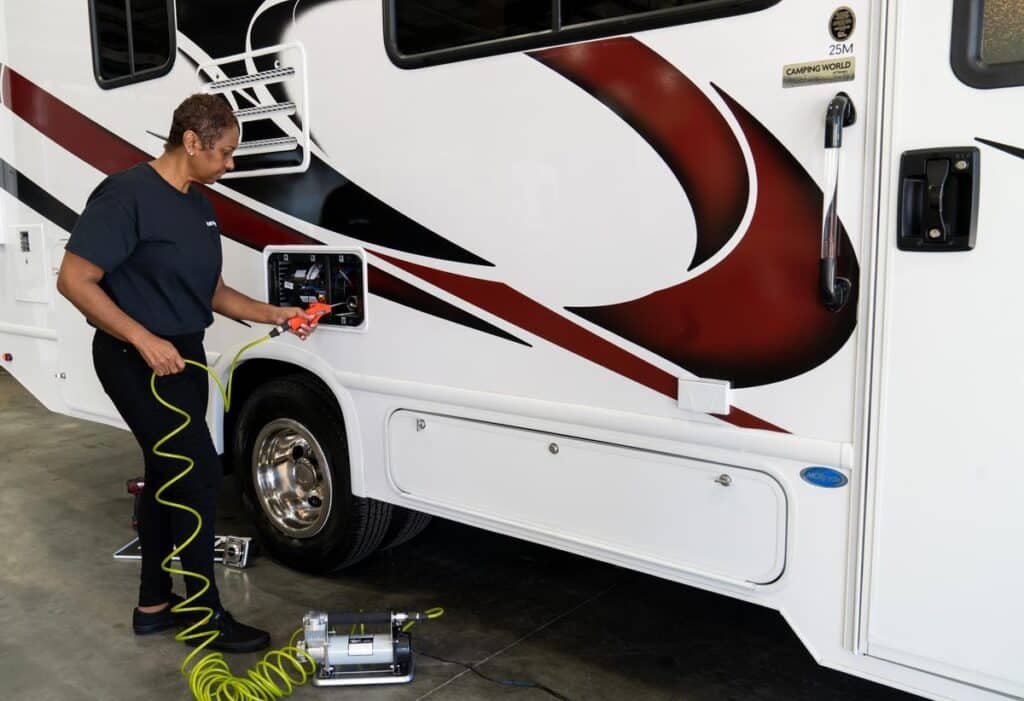
Cleaning the burner, inspecting the combustion chamber, and checking gas pressure all involve the sealed, gas-carrying parts of the furnace. These tasks should be left to a certified RV technician.
Technician Tip: In most states, legally repairing or servicing a closed liquid propane system also requires the technician to meet specific certification or licensing standards.
Working on these systems without the proper credentials can violate state regulations and create significant safety and liability risks. This is where a certified technician at your local Camping World can assist with any repairs and complete the proper test to confirm the quality of the repair.
What’s Included in a Professional RV Furnace Inspection?
A professional RV furnace inspection covers the parts of the furnace you can’t safely reach yourself, plus the propane and electrical systems that feed it. A typical annual inspection includes:
- Checking voltage at the furnace to confirm it has enough power to run properly
- Testing gas pressure and checking for propane leaks
- Inspecting the burner and igniter, and cleaning the burner
- Inspecting the combustion chamber for cracks, holes, and obstructions like nests
- Checking the blower motor and air wheels
- Inspecting the exhaust venting and vent cover
- Checking ductwork and return-air paths
- Checking wiring connections and gaskets
- Confirming your carbon monoxide and propane detectors are working
The combustion chamber check is one of the most important items on that list. A crack or hole in the chamber can’t be repaired in the field, and owners can’t inspect it themselves.
Keep in mind that manufacturer warranties don’t cover routine maintenance, so plan for it as a regular expense. Pricing varies by location, so contact your nearest service center for a quote. Camping World’s certified technicians handle RV furnace repair and annual service for all major brands.
Technician Tip: Keep an eye out for seasonal deals, as Camping World frequently offers service packages that cover all your preventive maintenance on your coach and multiple systems for one low price.
RV Furnace Maintenance Checklist

Here’s a simple RV furnace maintenance schedule to follow each year.
Before each heating season:
- Test the furnace
- Clean the exterior vent and remove any nests or debris
- Vacuum the furnace compartment and return-air area
- Test your LP/CO detector and check its manufacture date
- Clear clutter away from the furnace, floor registers, and return-air vent
- Remove your Propane cylinder cover and inspect for pest nests and lightly dust any debris off the regulator and tanks. Then reinstall.
Monthly while you’re using the furnace:
- Check the exterior vent for soot or blockages
- Keep return-air vents and floor registers clear
Once a year (by a technician):
- Complete furnace inspection, including burner cleaning
- Propane system leak check
- Propane container inspection
For the rest of your rig, see our complete RV maintenance checklist.
RV Furnace Maintenance FAQ
No. Forced-air RV furnaces are designed to run without a filter, so there’s no filter to check or replace. Don’t add one. A filter restricts the airflow your furnace depends on, and installing one can void your furnace’s warranty and create a potentially dangerous situation.
No. RV furnace blower motors are lubricated and permanently sealed at the factory, so there’s nothing to oil. If your blower is squealing, grinding, or running slowly, have a technician inspect it instead.
Yes. RV furnaces are designed to cycle on and off as your thermostat calls for heat, not to run nonstop, so regular winter use won’t burn one out. How long you can run it depends on your propane and battery supply. Our guide to how an RV furnace works includes a propane consumption calculator.
RV Furnace Not Working? Use our guide to safely perform DIY troubleshooting.
Have questions about your furnace? Good Sam Elite members can call the Technical Support hotline at 844-649-4700 for questions and maintenance tips.
What’s part of your RV furnace maintenance routine? Share your tips in the comments below.
The post RV Furnace Maintenance: Seasonal Checks, Cleaning & Annual Service appeared first on Camping World Blog.