The cost to winterize an RV depends primarily on two variables: whether you do it yourself or hire a professional, and the complexity of your RV’s plumbing system.
For most owners, the out-of-pocket cost runs from roughly $30 to $80 if they winterize themselves. Antifreeze costs $4-8 per gallon, and most RVs require 2-4 gallons, with any bypass kits or siphoning equipment adding to the first-year cost. If you already have your RV winterizing kit, the annual cost of antifreeze drops to roughly $20 to $30.
Professional winterization costs more, but the range is wide. Industry pricing for a basic blow-out service generally runs $75-100 at most dealerships and service centers, while a complete antifreeze package runs closer to $125-150.
Yes, winterizing your RV yourself is cheaper on paper. But professional service comes with a documented service record, warranty coverage (on select service packages), and the peace of mind that comes with having a certified RV technician do it correctly.
What Affects the Cost of RV Winterization?
Service package selected. The basic blow-out of RV water lines versus complete antifreeze service is the biggest pricing variable in professional winterization. A complete winterization service requires antifreeze and additional labor time but provides substantially better protection.
RV size and plumbing complexity. The number of water lines, the length of those lines, and the total volume of antifreeze required all scale with RV size. Most professional winterization services don’t charge extra based on system size, but it will affect the cost of antifreeze when winterizing yourself.
Number of water-using appliances. Each additional water-using appliance adds time and material to a professional job. A dishwasher, a washing machine, a refrigerator with an ice maker, an outdoor kitchen, or a second bathroom all require antifreeze to be routed through additional lines and fixtures.
Water heater type. Some tankless water heaters require adding antifreeze to prevent freeze damage to the heat exchanger lines. In these cases, a simple blow-out of water lines doesn’t protect the system.
Geographic location and timing. Service labor rates vary by market, and fall demand spikes can affect appointment availability. While pricing doesn’t change seasonally, waiting until the last week before your first expected freeze means competing for appointments with other RV owners in your area.
RV Winterization Service Costs: Basic vs Complete
Basic Winterization (blow-out only) uses compressed air to push water out of the plumbing lines. It’s the lower-cost option and works for straightforward RV plumbing systems under the right conditions. However, Basic winterization does not include antifreeze, which provides increased protection (and is required for RVs with some tankless water heaters). Blowing water lines out with compressed air alone can still leave trace amounts of water in the system, leaving it vulnerable to freeze damage.
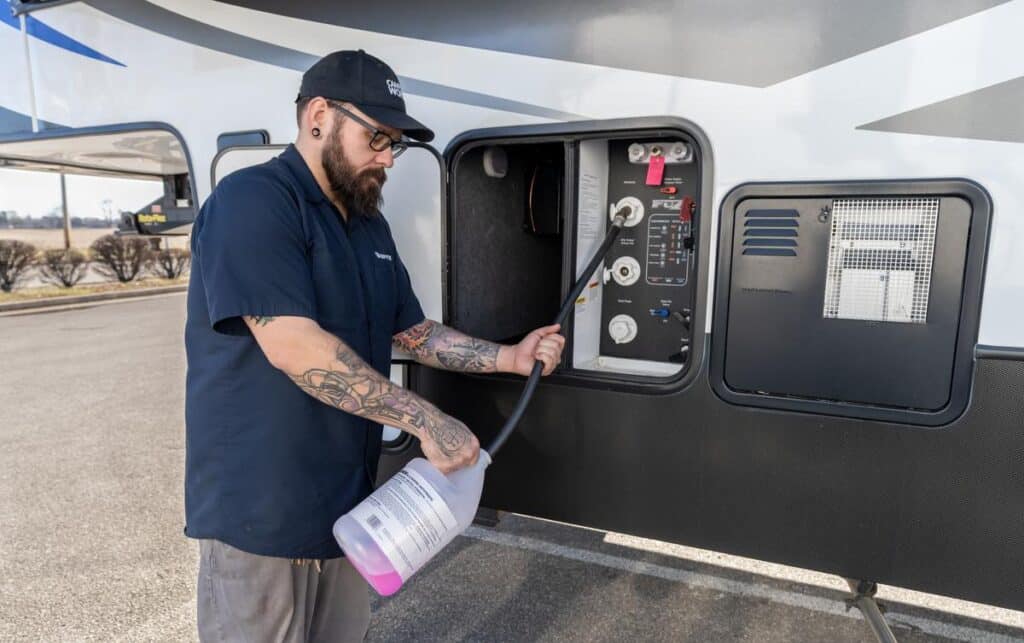
Complete Winterization blows out the lines and then pumps RV-safe antifreeze through the entire fresh water system. This provides a higher level of protection, is backed by a labor-only warranty, and is suitable for all RV types — including those with tankless water heaters. The Complete package costs more than the Basic package, but it’s the only option that provides documented, warranty-backed protection.
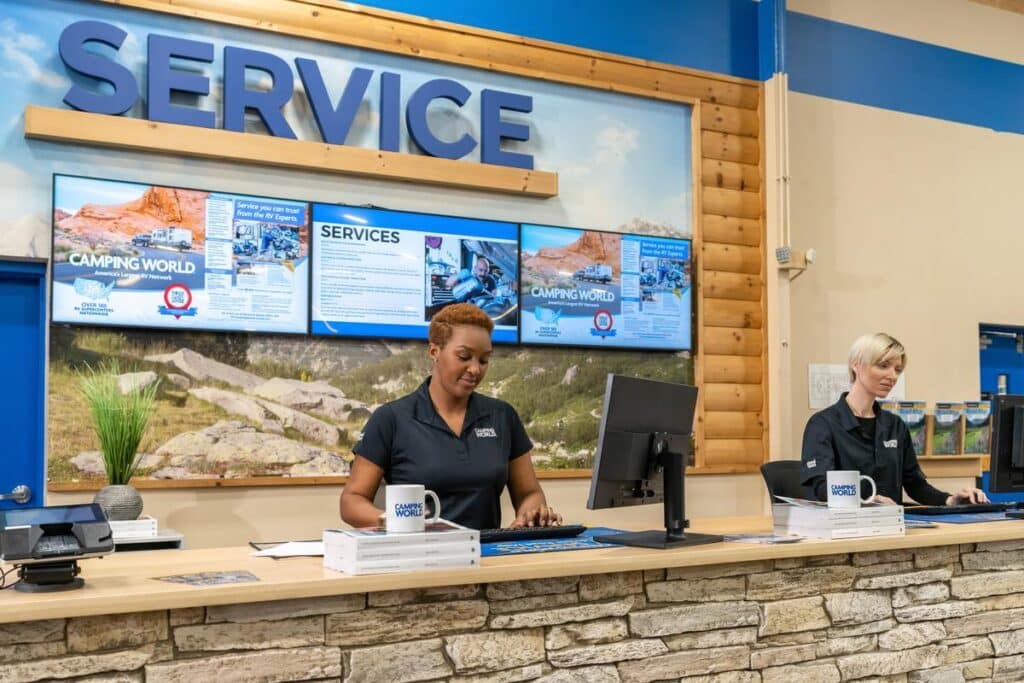
For a breakdown of what each package covers and what’s right for your RV, contact your nearest Camping World Service Center or schedule winterization service online.
RV Winterization Cost by RV Type and Size
Your chosen type of winterization service is the biggest factor that impacts how much you’ll pay for professional service. At home, a larger RV with longer plumbing lines means more antifreeze, which will drive up your costs.
Here’s how the four main RV categories generally shake out when winterizing at home:
Pop up campers and smaller travel trailers tend to have the simplest plumbing systems: a fresh water tank, a water pump, basic kitchen and bathroom fixtures, and modest holding tanks. These units are typically require the least antifreeze.
Mid-size travel trailers and fifth wheels have the broadest range in plumbing complexity. A double axle travel trailer with one bathroom is relatively straightforward. A mid-size fifth wheel with a second bathroom, an outdoor kitchen, or a washer/dryer prep requires more time and materials.
Large fifth wheels and travel trailers often include multiple bathrooms, larger fresh water tanks, and more fixture outlets — all of which add antifreeze.
Motorhomes represent the most complex winterization jobs. Larger tanks, longer water line runs, more appliances, and sometimes a second full bathroom or a washer/dryer unit all contribute to higher service costs. Motorhomes also require separate attention for the generator, as well as the engine cooling and fuel systems.
Is Professional RV Winterization Worth the Cost?
A water heater tank failure due to freeze damage costs more than most owners will spend on professional winterization over several seasons. A burst water line that goes undetected for weeks can cause water damage that dwarfs the cost of replacing any single component.
Here are some common freeze damage costs, based on industry repair data:
- Burst or cracked water lines: $200-1,500+
- Water pump replacement: $200-500
- Water heater tank replacement: $600-1,200+
- Faucet and fixture damage: $100-600+
- Extensive water damage (when a burst line goes undetected): $5,000-15,000+
Professional winterization service costs more than DIY, but it comes with the peace of mind of trusting skilled labor, a documented service record, and, in some cases, warranty coverage. The best way to get an accurate RV winterization quote is to contact your nearest service center directly or book online.
When you schedule, follow these tips:
- Book 3-4 weeks before temperatures dip into the 40s. Fall is the busiest season for winterization service, and appointments fill quickly as temperatures drop.
- Know your water heater type before you call. Letting your service center know in advance helps them plan accordingly.
- Ask about de-winterization when you book. Scheduling your spring startup service in advance simplifies seasonal maintenance planning.
Frequently Asked Questions
Travel trailers generally cost less to winterize than motorhomes because their plumbing systems tend to be simpler and motorhomes require additional attention beyond the water system. For example, their generator and chassis systems need separate winterization, adding to the total time and cost.
Professional de-winterization (also called spring startup service) typically costs less than winterization because it is less material-intensive. It involves flushing antifreeze from the system, pressurizing the water lines, and inspecting key components. Market rates for professional de-winterization generally range from $50 to $100, though pricing varies by location.
Getting your camper ready for its first winter? Here’s how to winterize an RV.
What’s your approach to RV winterization — DIY every season, or do you prefer to leave it to a pro? Tell us in the comments below.
The post How Much Does It Cost to Winterize an RV? appeared first on Camping World Blog.