Class C motorhomes give families something few other RVs offer: room for everyone, a full kitchen and bathroom, and a size that still drives like a large van. Most feature a signature bunk over the cab, with living and kitchen space in the middle and sleeping space toward the back. This guide covers why families love them, where they fall short, how to think about sleeping and seat belts, and a few lineups worth exploring.
Why Families Choose a Class C Motorhome
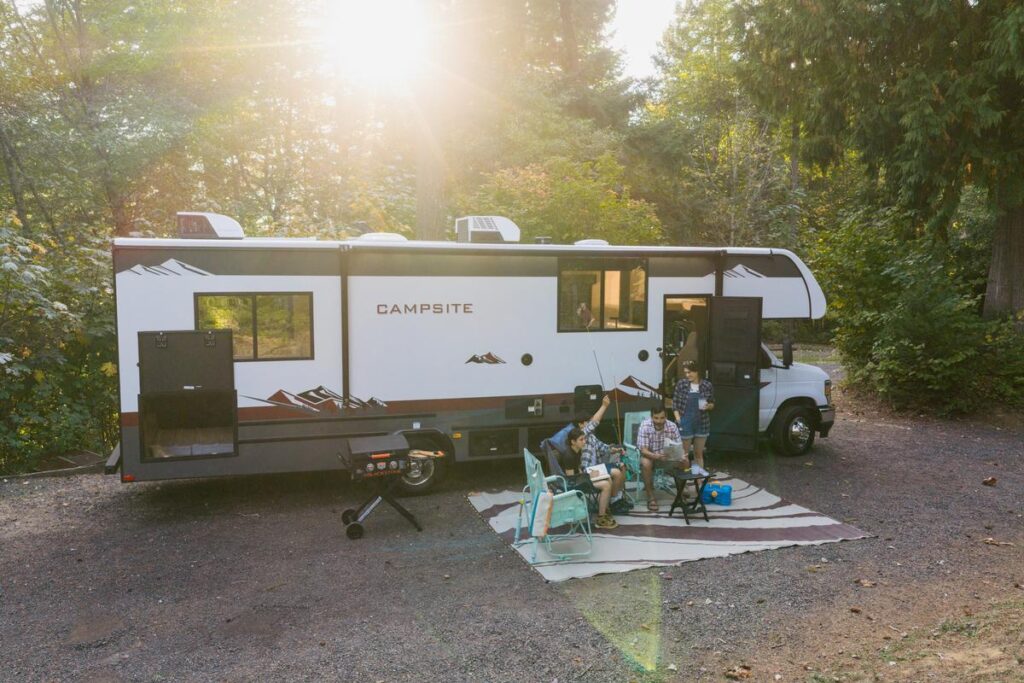
Class C motorhomes appeal to families because they balance size, drivability, and comfort without requiring a tow vehicle. Here’s what tends to win families over:
- The cabover bunk. Kids love it. It works as a dedicated bed that can stay made for the entire trip, and during the day it doubles as a reading or movie nook. Having one permanent sleeping spot means one less dinette or sofa to convert at night and put back each morning.
- No tow vehicle. You don’t need to worry about tow ratings, hitches, or extra hardware. Just hop in the cab and go. If you’re curious about pulling a small car behind one, see our guide to the best vehicle to tow behind an RV.
- Full bathroom. A Class C is self-contained, so a bathroom break or a snack doesn’t mean finding a rest area. A dedicated bathroom also makes camping with little ones, even those still potty training, much easier.
- Easier to drive than a Class A. A Class C drives more like a large van or truck than a bus. Most also include a built-in backup camera, which makes parking and backing into campsites easier. It’s easy for someone to learn to drive, so you can have a second driver.
- Easy to fit into campsites. Most Class Cs work in back-in and pull-through sites, while larger Class As, fifth wheels, and long trailers can be more restrictive.
Families also tend to find a Class C easier on the budget than a Class A. If you’re weighing the two, see our Class A vs Class C comparison.
When a Class C Might Not Fit Your Family
A Class C isn’t the right answer for every family, and not every Class C is a family Class C. These are the trade-offs that most often change someone’s mind:
- Typically more expensive than a towable. A Class C usually costs more than a comparable travel trailer or fifth wheel. If you already own a capable truck, see our guide to trailers vs motorhomes.
- No second vehicle. Once you’re parked, every trip to town means breaking camp unless you tow a car or bring bikes.
- Fuel economy. Larger Class Cs use more fuel than smaller camper vans, so budget for it, especially on long trips.
- Length and where you can camp. Longer family models can run into campground and national park limits. If you’re eyeing a camper over about 30 feet, check your destinations before you book.
- Storage and privacy. Bunks work great for younger kids. Teens may want more space than a bunk can offer.
- Heavier units can bring licensing rules. This typically comes into play only with Super C RVs, but very large, heavy motorhomes can trigger special licensing requirements in some states. See whether you need a special license to drive an RV before you shop at that end of the market.
How Many People Does a Class C Really Sleep?
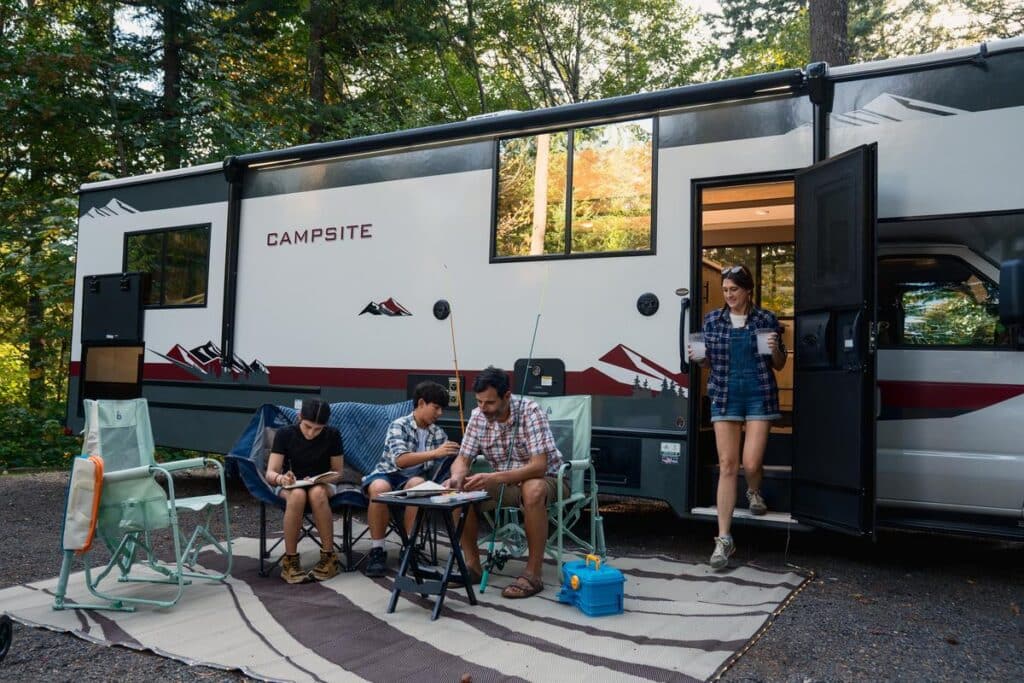
Most Class C motorhomes sleep four to eight people. The living area usually has extra convertible beds: a fold-out sofa and a convertible dinette — in addition to the cabover bed. The size of these beds will be model-dependent. Some will accommodate one adult or two children in each. Others will have larger capacities for up to two adults. Models with hallway bunks, as well as these convertible beds, will offer the most sleeping capacity for larger families.
However, families should be aware that sleeping capacity doesn’t always match seatbelt capacity in every Class C. When you compare layouts, count the belted seating positions separately from the beds. The cab seats and the dinette or sofa usually count differently, so ask how many are belted in each floorplan.
Also, check bunk weight ratings. Kids grow; bunks don’t. Manufacturers publish weight ratings for bunks, and they differ by model.
What Size Class C Is Right for My Family?
There’s no single right length, but the trade-off is simple: shorter is easier to drive and park, and longer gives you more living space. These ranges are a rough guide, not a rule:
- Under about 27 feet: Easier to drive and park, and it fits more campsites. Some models in this range sleep four to six. See our roundup of small Class C motorhomes.
- Roughly 28 to 32 feet: More living space and slide-outs for larger families, but more campground restrictions. Many national and state park campsites cap length at 30 feet.
- Over about 32 feet: This is where many bunkhouse floorplans live, but also where campsite length limits matter most.
For a smaller family, look for a shorter Class C with a cabover and a convertible dinette. These are easier to drive and easier to fit into campsites and national parks with length limits. The rear bedroom keeps parents comfortable, and a U-shaped dinette gives everyone a place to hang out.
Families of six should look for longer units, often 30 feet or more, with slide-outs that add space for the convertible dinette and fold-out sofa. A kitchen with real counterspace matters when six people are eating.
The largest families (7 or more) should look for bunkhouse floor plans. Many of these models place the bunks in the middle of the coach, so they’re close to the adults yet still separate. With bunks plus a cabover and the convertible dinette and sofa, these motorhomes offer the maximum sleeping capacity in the Class C segment.
Popular Family Class C Brands
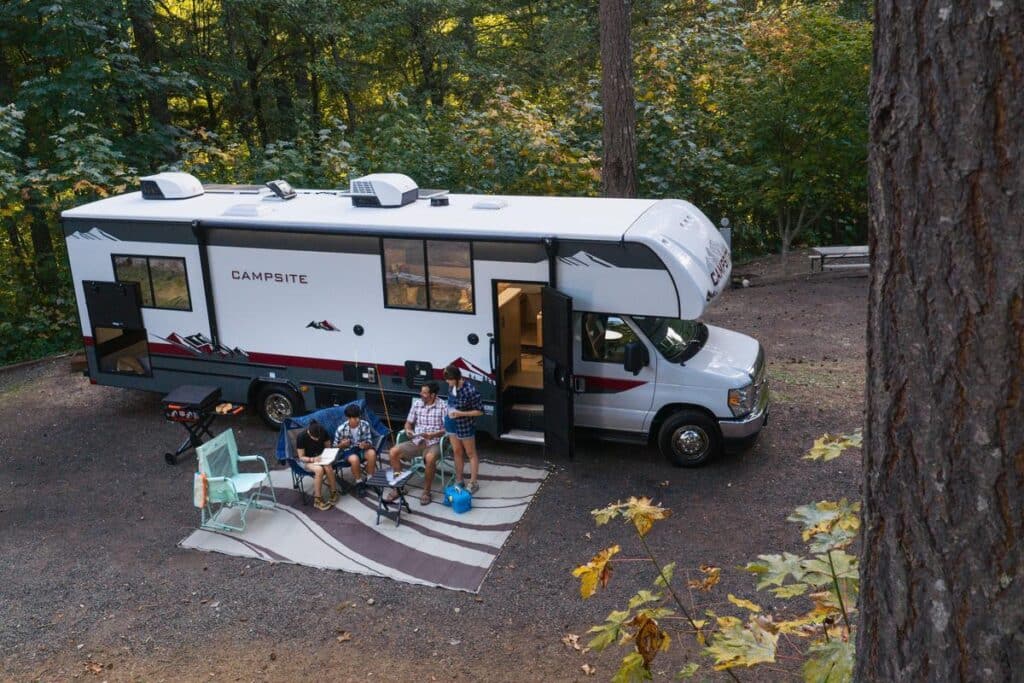
If you’re ready to start looking, these lineups keep coming up on our family lists. We’re naming lineups, not individual units, because floor plans change by model year.
| Brand | Manufacturer | Why families look at it |
|---|---|---|
| Freedom Elite Coleman Eddie Bauer |
Thor Motor Coach | Thor’s three related Class C lines offer floor plans ranging from about 20 to 33 feet, including 32-foot family layouts such as the 31FE, 31CM, and 31ED. |
| Greyhawk Redhawk Redhawk SE |
Jayco | Jayco’s three Class C tiers run from about 22 to 33 feet and sleep up to seven, with seat belts in every designated seating position and a 750-pound overhead bunk. |
| Forester | Forest River | Forester spans compact to full-size gas and diesel Class Cs from about 20 to 32 feet, adds child-seat head tethers at the dinette, and offers a bunkhouse (the 3251DSLE) with a dedicated Kid Zone. |
| Minnie Winnie Spirit |
Winnebago | Six floor plans in each line, ranging from about 24 to 33 feet that sleep five to eight, each with a rear bedroom and a cabover bunk (plus dual bunk beds on the 31H). |
| College Avenue | East to West | Forest River’s newest family Class C offers floor plans from front living to a bunkhouse that sleeps up to eight, with a one-piece fiberglass front cap and Starlink® and solar prep. |
| Freelander Leprechaun |
Coachmen | The two lines offer floor plans from about 24 to 33 feet, each with an 800-pound-rated cabover bunk, a child tether at the dinette, and sleeping space on convertible dinettes and sofas rather than dedicated bunks. |
Floor plans and specs change by model year, so confirm the details with the manufacturer before you buy. Use our roundups of Class C RVs with bunk beds and Class C motorhomes under 25 feet to see specific models.
How To Choose a Class C RV for Your Family: A Quick Checklist
A quick checklist helps narrow the field before you start walking through RVs:
- Beds and seatbelts. How many people sleep, and how many belted seats do you need?
- Kids’ ages and bunk ratings. Will the bunks still work in two or three years?
- Length. What’s the longest rig your favorite campgrounds and parks allow?
- Towing a car. Will you tow one for local trips? Our guide to the best vehicles to tow behind an RV can help.
- Fuel and trip length. How far and how often will you drive?
- The alternative. What would a bunkhouse trailer or fifth wheel cost you, including the truck?
For a full picture of purchase price and ownership costs, explore how much an RV costs.
Want to see specific models? Check out our picks for the best Class C RVs.
Do you think your family needs a Class C? Let us know why in the comments below.
The post Is a Class C Motorhome Right for Your Family? appeared first on Camping World Blog.